Key takeaways
- Five wireless home alarm starter kits compared on sensor counts, siren volume, backup power and monitoring terms for apartments and family houses.
As an Amazon Associate we earn from qualifying purchases.
A starter kit decides how protected your home feels on the first night and how much extra hardware you end up buying later. The real choice is not the siren or the app screen; it is whether the box covers your actual doors, whether alerts still reach your phone when the Wi-Fi drops, and whether the features you care about keep working without a monthly plan. Piece counts on the packaging can mislead, because keypads and range extenders count as pieces too.
This guide serves apartment renters guarding one or two doors, families covering a two-storey house, and smart-home owners who want the alarm to work alongside locks and lights. Every kit below bundles a hub or keypad with wireless sensors in a single listing, and each one was chosen from the names, contents and specifications published on its Amazon product page, so the sensor counts and siren figures match what you would actually receive.
Quick Picks
Disclosure: This article contains affiliate links. If you buy through these links, we may earn a commission at no extra cost to you.
| Product | Best for | Key spec |
|---|---|---|
| Ring Alarm 14-Piece Kit | Two-storey houses with a second entry that needs its own keypad | 8 contact sensors, 2 keypads |
| SimpliSafe 8 Piece Wireless Home Security System | Households that want a panic button and monitoring with no contract | 95 dB siren, cellular base station |
| SimpliSafe 9 Piece Wireless Home Security System with HD Camera | Homes that want to see the hallway when the alarm trips | 1080p indoor camera included |
| Arlo Home Security System (SS1201) | Homes where one sensor should also watch for leaks and frozen pipes | 8-in-1 sensors with leak and freeze sensing |
| abode Smart Security Kit (4-Piece) | Apple HomeKit homes that also run Z-Wave locks and Zigbee lights | Z-Wave and Zigbee hub with 93 dB siren |
How to Choose
Count Entry Sensors, Not Total Pieces
Start by walking your home and listing every door and ground-floor window you want covered, then compare that number with the entry sensor count in each box, not the headline piece count. A 14-piece kit may include two keypads and a range extender, which protect nothing by themselves. The Ring kit below carries eight contact sensors, while the abode kit carries one, so the smaller box suits a single-entry flat and the larger one suits a house with a back door, a garage door and several windows.
Decide How Alerts and Monitoring Should Work
Every kit here sounds its siren and arms from its keypad with no plan at all, but what happens next differs sharply by brand. Ring states on its own listing that Alarm accessories require a subscription for in-app features and digital notifications, so app alerts and phone arming sit behind a plan. SimpliSafe and Arlo frame professional monitoring as an optional add-on with no contract, while abode keeps basic push alerts free and reserves richer alerts for its paid tiers. Decide before ordering whether you want a monitoring centre to call for help, simple phone alerts, or just a loud siren.
Check What Keeps Working During an Outage
Sensors run on their own batteries, so they keep sensing when the power fails; the question is whether the hub stays alive and can still reach you. Ring and SimpliSafe base stations carry a rechargeable backup rated at up to 24 hours, and the SimpliSafe base also has a built-in cellular connection for sending alarm signals. The abode hub has a smaller built-in backup battery, and its cellular backup only runs on a paid plan. If your street loses power often, or your broadband drops, weigh backup hours and a cellular path as heavily as sensor counts.
Match the Hub to Your Smart Home and Router
The hub decides which other devices your alarm can talk to and where it has to live. Ring is built for Alexa households and Ring cameras. SimpliSafe works with both Alexa and Google Assistant. The abode hub speaks Z-Wave and Zigbee, so it can enrol smart locks and lights directly, and it works with Apple HomeKit, but it connects to your router by Ethernet cable only. Arlo’s keypad hub is a wired, plug-in unit using its SecureLink link to the sensors. Check your router’s free ports and your voice platform before choosing.
The 5 Best Options
Ring Alarm 14-Piece Kit

This is the kit for a house with many openings: two keypads mean you can arm from the front hall or the garage entry, and eight contact sensors cover doors and windows without an immediate second order. The base station pairs Ethernet with Wi-Fi and adds a range extender for larger floor plans, and the whole system ties into Alexa routines and Ring cameras. It suits families who accept a Ring plan as part of the deal, because the listing makes clear that app features and digital notifications need that subscription.
Specs
- In the box: base station, 2 keypads, 8 contact sensors, 2 motion detectors, 1 range extender
- Base station size: 6.65 x 6.65 x 1.46 in
- Base station power: 100-240V AC adapter with rechargeable 24-hour battery backup
- Connectivity: Ethernet, Wi-Fi, Z-Wave, Bluetooth for setup
- Security modes: Disarmed, Home and Away
- Contact sensor power: CR2032 coin cell batteries
- Motion detector power: 2 AA batteries
Best for: Larger homes with two entrances and many windows to cover on day one.
Watch out for: A Ring subscription is required for in-app features, digital notifications and professional monitoring, so the kit alone does not give you phone alerts.
ASIN: B08YMBQJ49
SimpliSafe 8 Piece Wireless Home Security System

SimpliSafe’s eight-piece set balances coverage and simplicity for a typical flat or small house: four entry sensors, a motion sensor and a panic button for a bedside drawer or an elderly relative’s pocket. The base station hides a 95 dB siren, a built-in cellular connection and a 24-hour battery backup, so the alarm can still signal out when broadband fails. Monitoring is offered without a contract, and the system takes voice commands through Alexa and Google Assistant, which makes it a comfortable first alarm for households leaving a legacy wired panel behind.
Specs
- In the box: 1 base station, 1 keypad, 4 entry sensors, 1 motion sensor, 1 panic button
- Siren: 95 dB from the base station
- Base station link: built-in cellular connection with 24-hour battery backup
- Connectivity: wireless, with voice control through Alexa and Google Assistant
- Installation: DIY, plug in the base station and place the sensors
- Colour: White
Best for: Small houses and flats that want a panic button plus contract-free monitoring.
Watch out for: Professional monitoring is a paid add-on, so confirm the current plan terms before relying on emergency dispatch.
ASIN: B07C38HT49
SimpliSafe 9 Piece Wireless Home Security System with HD Camera

Choose this bundle when a siren alone feels too blind: alongside the base station and keypad you get four entry sensors, two motion sensors and a SimpliCam indoor camera, so an alert can come with a view of the room that triggered it. The base station keeps the same cellular link, 24-hour backup and 95 dB siren as its sibling kit, and the motion sensors are designed for human detection. It fits homes with two living areas to watch, or owners who want video confirmation before they call a neighbour or the monitoring centre.
Specs
- In the box: base station, keypad, 4 entry sensors, 2 motion sensors, SimpliCam indoor camera, yard sign and decals
- Model number: SS3-AMZ-3
- Camera: 1080p HD video with a 120° field of view
- Siren: 95 dB from the base station
- Base station link: built-in cellular connection with battery backup up to 24 hours
- Installation: self-adhesive or screw-in, guided by the SimpliSafe app
Best for: Homes that want indoor video evidence alongside door and motion alerts.
Watch out for: The included camera is a wired indoor model, so plan its spot near a power outlet before you mount anything.
ASIN: B07GXW7KR6
Arlo Home Security System (SS1201)

Arlo takes a different route: instead of single-job sensors, each of its three All-in-One sensors can be assigned eight jobs, from door open and close sensing to water leak and freeze detection, smoke and carbon monoxide alarm listening, tilt and light changes. One puck under a sink can therefore guard a door and the plumbing at once. The keypad hub carries its own siren and motion sensing plus one-tap emergency buttons, and monitoring is offered with no contract. It suits owners who worry about burst pipes and cold snaps as much as break-ins.
Specs
- In the box: Keypad Sensor Hub and 3 All-in-One Sensors
- Model number: SS1201
- Sensor jobs: open/close, motion, water leak, freeze, tilt, smoke alarm listening, CO alarm listening and light sensing
- Hub: wired keypad hub with built-in siren, motion sensing and one-tap emergency buttons
- Monitoring: 24/7 professional monitoring available, no contract required
- Installation: DIY, with sensors linking to the hub over SecureLink
Best for: Homes in cold climates where leak and freeze alerts matter as much as intruders.
Watch out for: Professional monitoring runs on a paid Arlo Secure plan, and the keypad hub is a wired plug-in unit, so it needs an outlet within cable reach.
ASIN: B0F5MJ9WPL
abode Smart Security Kit (4-Piece)
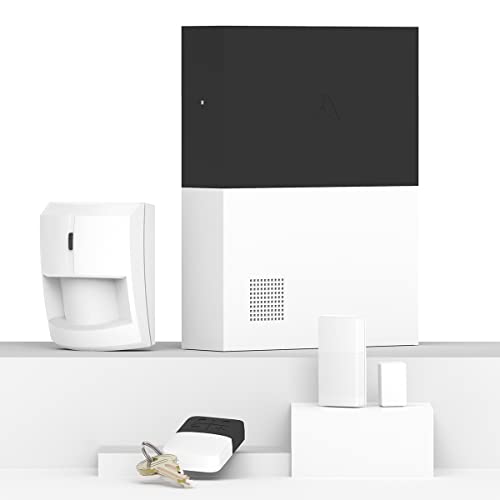
This is the smallest box in the guide and the most open one. The hub doubles as a Z-Wave and Zigbee controller, so locks, lights and switches from other brands can enrol directly, and it works with Apple HomeKit, Alexa and Google Assistant. You start with one mini door sensor, one motion sensor and a key fob for arming without a phone, then grow the system sensor by sensor. It is the natural pick for a studio or one-bedroom flat, or for a smart-home enthusiast who would rather build coverage slowly than buy a big bundle upfront.
Specs
- In the box: gateway hub, mini door/window sensor, motion sensor, key fob and sticker
- Model number: 103000/D
- Siren: 93 dB, built into the hub
- Connectivity: Ethernet to the router, with Z-Wave and Zigbee for smart devices
- Works with: Apple HomeKit, Amazon Alexa and Google Assistant
- Sensor batteries: CR123A, up to 2 years
- Hub: built-in backup battery for power cuts
Best for: Small flats and HomeKit households that plan to expand gradually.
Watch out for: The hub has no Wi-Fi and must connect to your router with an Ethernet cable, and there is no keypad in the box, so check your router location first.
ASIN: B0793N1V54
Which One Fits Your Situation
Renting a Flat You Cannot Drill Into
Pick the abode Smart Security Kit. Its sensors stick on with adhesive, the single door sensor and motion sensor cover a typical one-entry flat, and the key fob lets you arm the system without wiring in a keypad. When you move, the whole kit peels off and travels with you, and you can add sensors for the next place.
A Family House With Doors on Two Floors
Pick the Ring Alarm 14-Piece Kit. Eight contact sensors cover the front, back and garage doors plus ground-floor windows, and the second keypad means nobody has to cross the house to arm at night. The range extender helps the far sensors stay connected across a larger floor plan.
You Want Eyes Inside When the Alarm Trips
Pick the SimpliSafe 9 Piece kit with the HD camera. When a motion sensor fires, you can open the camera feed and see whether it is a family member or a stranger before deciding what to do. The four entry sensors and second motion sensor still cover the doors and main rooms properly.
A Cold-Climate Home With Pipes to Protect
Pick the Arlo Home Security System. Its 8-in-1 sensors can sit by the water heater or under a sink and report leaks and freezing temperatures alongside their door and motion duties. That double duty means one small kit guards against the two problems that cause the most winter damage.
Common Mistakes
- Counting headline pieces instead of entry sensors, then finding the back door and two windows uncovered on the first night.
- Assuming phone alerts are automatic, when some kits keep app notifications and remote arming behind a subscription.
- Placing the only motion sensor in a hallway pets cross all day, instead of a room intruders must pass through.
- Sticking contact sensors onto wide or uneven door frames where the two halves sit too far apart to register as closed.
- Hiding the base station in a cupboard or basement corner where its siren is muffled and its signal to distant sensors weakens.
Frequently Asked Questions
Do these kits work without a subscription?
The sirens, keypads and local arming work without any plan on all five kits, so an intruder still triggers a loud alarm. What changes by brand is everything beyond that: Ring keeps app alerts and phone control behind a subscription, while SimpliSafe, Arlo and abode offer free basic alerts and sell professional monitoring as an optional extra.
Can I add more sensors after the starter kit is running?
Yes. Every system here is built to expand, and each brand sells extra entry sensors, motion sensors and accessories that pair with the same hub. The abode hub also enrols Z-Wave and Zigbee devices from other brands, while Ring, SimpliSafe and Arlo mostly grow with their own accessories, so check compatibility before ordering add-ons.
What happens to the alarm during a power cut?
The sensors run on their own batteries and keep sensing. Hubs with backup batteries keep the system armed and sounding: Ring and SimpliSafe base stations run for up to 24 hours, while the abode hub’s backup is smaller. Sending alerts during the cut also needs a working internet path or a cellular backup option.
Are wireless starter kits suitable for renters?
Usually, yes. Sensors mount with adhesive pads rather than screws, keypads can sit on a shelf, and nothing needs wiring into the building, so the kit can move with you. Check your lease for alarm rules, warn neighbours about siren volume, and keep the packaging so sensors and hubs travel safely to the next home.