Key takeaways
- Four portable inverter generators with remote start, compared on running watts, fuel choice, run time and noise, plus the safety checks that matter.
A remote start fob sounds like a small luxury until the power fails at two in the morning, rain is coming sideways, and the generator is sitting twenty feet from the back door. The real decision is not whether the fob works, but whether the machine behind it has the running watts, fuel range, and quiet output your situation demands, because a remote that starts an undersized or deafening generator solves nothing. The four models below span compact RV duty through whole-house backup.
This guide is for RV owners who start and stop power from inside the rig, homeowners who want outage backup they can fire up without going outside, and tailgaters or campers who value quiet output. Every pick is a true inverter generator whose Amazon listing states remote start in its title or feature list, and each one was chosen from the wattage, fuel, run time, and noise figures printed on that listing.
Quick Picks
As an Amazon Associate we earn from qualifying purchases
| Product | Best for | Key spec from title |
|---|---|---|
| Champion 4500-Watt Wireless Remote Start Inverter Generator | RV and camping power you start from inside | 4500 starting watts, wireless remote start |
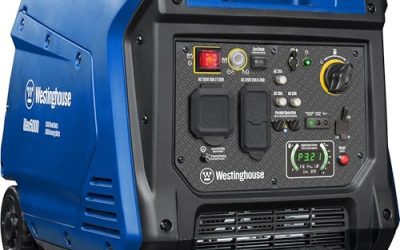
| Westinghouse iGen5000 | Quiet gasoline power with long run time | 5000 peak watts, remote electric start |
| Westinghouse iGen5000DFc | Fuel flexibility during long outages | 5000 peak watts, dual fuel with CO sensor |
| Champion 11,000-Watt Wireless Remote Start Inverter Generator | Whole-house backup on an inverter | 11,000 starting watts, wireless remote start |
How to Choose
Match running watts to your load, not the headline number
Generators advertise two figures, and the smaller one does the daily work. Starting watts cover the brief surge when a motor kicks on; running watts are what the machine sustains for hours. Add up the running draw of everything you expect to power at once, then check the surge of the largest motor, such as an RV air conditioner or a well pump. A 3,500 running watt unit handles an RV air conditioner plus lights and a fridge, while whole-house loads like a furnace blower, sump pump, and kitchen circuits push you toward the 9,000 running watt class.
Decide how far the remote has to reach
Every remote start system here uses a key fob, and Champion rates its fob at up to 80 feet. That range is measured in the open, so walls, a metal RV skin, and distance across a yard all eat into it. Think about where the generator will actually sit, which is at least 20 feet from the house for safety, and where you will be when you press the button. If the fob barely reaches from the bedroom to the pad, the feature disappoints. Also confirm the listing includes the fob and a battery for electric start, since a dead starter battery turns remote start into a walk outside anyway.
Pick a fuel strategy before the outage picks one for you
Gasoline-only models are simpler and usually lighter for their output. Dual fuel models add propane, which stores for years without going stale, burns cleaner, and keeps a spare tank useful long after the gasoline can is empty, though propane output drops, on the Westinghouse below from 3,900 to 3,500 running watts. Tri-fuel and natural gas connections suit fixed home setups. Match the choice to how you store fuel today: a camper with two propane bottles already owns the second fuel, while a homeowner with a transfer switch may care more about total gasoline run time per tank.
Read the noise rating and the fine print behind it
Inverter generators earn their keep at campgrounds and in neighborhoods because enclosed cases and economy modes hold sound down. Ratings appear in decibels, but brands measure at different loads and distances, so treat the figure as a rough guide rather than an absolute. Champion quotes 61 dBA for its 4,500 watt model and 64 dBA from 23 feet for the 11,000 watt model, while Westinghouse rates the dual fuel pick as low as 52 dBA at light load. Bigger engines are louder no matter the casing, so if quiet is the priority, stay in the mid-size class.
The 4 Best Options
Champion 4500-Watt Wireless Remote Start Inverter Generator

This is the balanced pick for RV and camping duty. Its 3,500 running watts cover a travel trailer air conditioner, refrigerator, lights, and device charging, and the wireless fob starts or stops the unit from up to 80 feet away, so you can kill the noise from bed when the air conditioner is no longer needed. The 2.3 gallon tank stretches to 14 hours of run time, the Intelligauge tracks voltage, frequency, and hours, and the parallel connection lets a second Champion inverter double output later. At 61 dBA it suits campground use.
Specs
- Starting watts: 4,500
- Running watts: 3,500
- Engine: 212cc 4-stroke OHV
- Fuel: gasoline, 2.3 gallon tank
- Run time: up to 14 hours
- Noise: 61 dBA
- Start: wireless remote fob, electric, and recoil
- Parallel ready with optional kit sold separately
Best for: RV owners and campers who want mid-size power started from inside the rig.
Watch out for: the parallel kit and any RV adapter beyond the included pieces are separate purchases, and the fob battery and starter battery both need attention in storage.
ASIN: B08HGPR7BD
Westinghouse iGen5000

The iGen5000 leans into run time and quiet gasoline operation. It delivers 5,000 peak watts and 3,900 rated watts at under 3 percent total harmonic distortion, so laptops, televisions, and other sensitive electronics run on clean inverter power. A 3.4 gallon tank runs up to 18 hours because the engine varies its speed to match the load instead of revving constantly. Starting comes from a push button, the included remote fob, or a recoil backup, and the panel carries a TT-30R RV outlet, two household outlets, and USB ports. A telescoping handle and wheel kit handle the moving.
Specs
- Peak watts: 5,000
- Rated watts: 3,900
- Total harmonic distortion: under 3 percent
- Fuel: gasoline, 3.4 gallon tank
- Run time: up to 18 hours
- Start: remote key fob, push-button electric, and recoil
- Outlets: TT-30R RV, two 20 amp household, USB ports
- Parallel capable
Best for: homeowners and RVers who want long, quiet gasoline run time without a propane setup.
Watch out for: it is gasoline only, so stored fuel needs stabilizer and rotation, and the listing gives no decibel figure to compare directly against rated rivals.
ASIN: B06XC47ZX4
Westinghouse iGen5000DFc

The dual fuel version of the 5,000 watt Westinghouse trades a little output for a second fuel. On gasoline it matches the iGen5000 at 5,000 peak and 3,900 running watts; on propane it delivers 4,500 peak and 3,500 running watts, stretching to 22 hours on a standard 20 pound tank according to the listing figures. That makes it the outage planner of the group, since propane never goes stale in storage. It keeps the remote fob and push-button start, adds a CO sensor with automatic shutdown, and is rated as low as 52 dBA at light load.
Specs
- Peak watts: 5,000 on gasoline, 4,500 on propane
- Running watts: 3,900 on gasoline, 3,500 on propane
- Fuel: gasoline or propane, 3.4 gallon gasoline tank
- Run time: up to 18 hours on gasoline, up to 22 hours on a 20 pound propane tank
- Noise: as low as 52 dBA
- Safety: CO sensor with automatic shutdown
- Start: remote key fob, push-button electric, and recoil
- Parallel capable
Best for: households that store propane and want backup power that is ready after months in the garage.
Watch out for: propane output is lower, so size your loads against 3,500 running watts, and the propane hose and regulator setup must be checked before the first outage, not during it.
ASIN: B099KSY4XG
Champion 11,000-Watt Wireless Remote Start Inverter Generator

This is the home backup heavyweight of the group, an enclosed inverter that behaves more like a standby unit you can wheel. Its 9,000 running watts at 120/240 volts feed a transfer switch or interlock through 30 amp locking and 50 amp outlets, covering a furnace blower, refrigerator, sump pump, lights, and a window air conditioner together. The 459cc engine and 6.08 gallon tank run up to 15 hours, the fob works from up to 80 feet, and CO Shield shuts the engine down if carbon monoxide builds up. Output stays clean at under 3 percent THD.
Specs
- Starting watts: 11,000
- Running watts: 9,000
- Engine: 459cc 4-stroke OHV
- Fuel: gasoline, 6.08 gallon tank
- Run time: up to 15 hours
- Noise: 64 dBA from 23 feet
- Weight: 200 pounds
- Outlets: 120/240V 30 amp locking, 120/240V 50 amp, two GFCI household duplex, 12V automotive
- Safety: CO Shield carbon monoxide auto shutoff
Best for: homeowners who want one inverter generator that can carry most of a house through an outage.
Watch out for: at 200 pounds it is a two-person lift despite the wheel kit, it is not parallel capable, and its size and noise rule it out for camping.
ASIN: B0CYR4XHLY
Which One Fits Your Situation
You camp or travel by RV most weekends
Choose the Champion 4500. Its TT-30R RV connection, 61 dBA rating, and 14 hour run time fit campground rules and overnight air conditioning, and the fob means starting the coffee maker circuit without leaving the trailer on a cold morning. The parallel option leaves room to grow.
You want home backup but hate storing gasoline
Choose the Westinghouse iGen5000DFc. Propane keeps indefinitely, so the generator is genuinely ready after a quiet season in storage, and the 22 hour propane run time covers a long outage day. Just size your essential circuits against the lower propane output before you rely on it.
You lose power for days and run most of the house
Choose the Champion 11,000 watt model. The 120/240 volt output and 50 amp outlet pair with a transfer switch or interlock kit, 9,000 running watts carry the big household loads together, and remote start from indoors matters most exactly when weather is at its worst.
You need one quiet all-rounder for home and road
Choose the Westinghouse iGen5000. It splits the difference with 3,900 rated watts, the joint-longest gasoline run time here at 18 hours, an RV outlet for trips, and clean power for electronics, as long as gasoline-only fueling fits how you already store fuel.
Generator Safety Checks
- Run every generator outdoors only, at least 20 feet from the house, with the exhaust pointed away from windows, doors, and vents. Carbon monoxide is colorless and odorless, and it can reach lethal levels indoors or in a garage within minutes.
- Treat a CO sensor as a backup, not permission. The Westinghouse iGen5000DFc and the Champion 11,000 watt model list automatic CO shutdown, but placement rules still apply in full, and a battery powered CO alarm inside the home is a separate, necessary layer.
- Never refuel a hot or running engine. Let the unit cool, keep fuel containers grounded and away from the exhaust, and store gasoline in approved containers away from living spaces and ignition sources.
- Connect a house through a transfer switch or interlock kit installed by an electrician. Backfeeding through a dryer outlet endangers line workers and your own wiring, and it is illegal in many jurisdictions.
- Keep the generator dry. Operate it on a firm, level surface under an open canopy if rain protection is needed, and never touch it or its cords with wet hands.
Common Mistakes
- Sizing by starting watts alone, then discovering the running wattage cannot carry the air conditioner and refrigerator at the same time.
- Parking the generator in the garage or under a closed carport because the remote start makes it feel like an indoor appliance.
- Forgetting the starter battery. Remote and electric start both depend on it, and a battery left flat all winter leaves you pulling a recoil cord in the dark.
- Ignoring the propane derate on dual fuel models and planning loads against the higher gasoline figures.
- Skipping break-in and oil changes. New engines need an early oil change after the first hours of running, and the hour meter on the panel exists for exactly that schedule.
Frequently Asked Questions
How far away does remote start actually work?
Champion rates its key fob at up to 80 feet in the open, and Westinghouse describes its fob as wireless remote start without a headline distance. Real range shrinks through walls, metal siding, and vehicles. Test the fob from where you plan to sleep before an outage, and keep the recoil and push-button starts as your fallback.
Can I run a generator in the garage if the door is open?
No. An open garage door does not move enough air, and carbon monoxide can build to dangerous levels and drift into the house. Run the generator outdoors at least 20 feet from the building with the exhaust facing away, and rely on indoor CO alarms as a warning layer, never as protection that makes indoor running acceptable.
Is inverter power really safer for electronics?
Yes, within the figures the listings state. These models produce power at under 3 percent total harmonic distortion, which is the clean, stable output laptops, televisions, and phone chargers are designed for. Conventional open-frame generators often run far higher distortion. Check the THD figure on any listing you compare, since it is the number that backs the claim.
Does remote start drain the battery while the generator sits?
It can. The receiver listens for the fob signal continuously, and small draws add up over months of storage. Listings include battery chargers or tenders with some models for this reason. Follow the storage instructions, disconnect or maintain the battery in the off season, and start the engine monthly so the first real outage is not your test run.