Key takeaways
- Find the best binocular compound microscopes with mechanical stages: four lab microscopes compared by magnification, optics, stage, lighting and focus.
A binocular compound microscope is the tool that turns a slide into a view worth studying, and the mechanical stage is what makes that view usable. Without a stage that moves the slide in small, controlled steps, finding a specimen becomes a matter of nudging glass by hand and losing the field of view. With one, the slide glides along X and Y axes and returns to the same coordinates again and again. The stage also protects the slide, since the clip holds it still while the knobs do the moving, instead of fingers pushing glass across the stage.
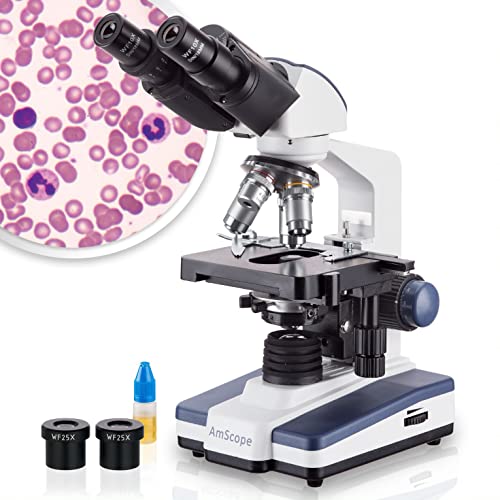
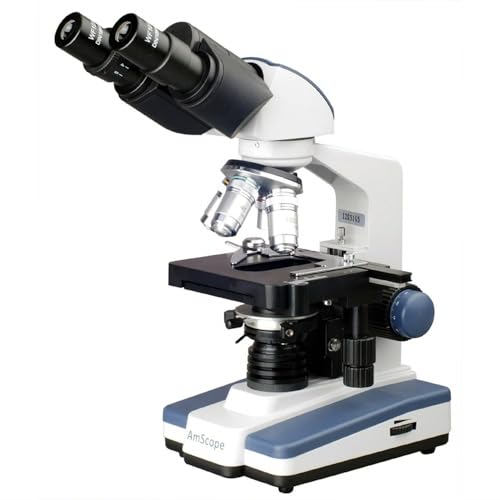
This guide is for students, hobbyists and lab workers who need a compound microscope with two eyepieces and a proper mechanical stage, for biology, veterinary work or home science. The four microscopes below were chosen from the names and specifications on their Amazon pages, with the magnification, objectives, stage type and lighting checked against each listing.
Quick Picks
As an Amazon Associate we earn from qualifying purchases
| Product | Best for | Key spec from title |
|---|---|---|
| AmScope B120C | Serious students and labs | 40X-2500X with Siedentopf head |
| AmScope B120 | Classroom and home use | 1000X with LED light |
| OMAX MD827S30 | Budget lab work | 2000X with mechanical stage |
| OMAX MD82ES10 | LED-lit bench work | 2000X LED microscope |
How to Choose
Magnification and objectives
Magnification is set by the eyepieces and the objectives together, so check both before judging the headline number. A microscope with 10x eyepieces and 4x, 10x, 40x and 100x objectives covers most biology work, from whole organisms down to bacteria. Higher magnification is only useful if the optics are good enough to resolve detail at that level, and oil immersion objectives need oil and careful cleaning. Pick a range that matches the specimens, not the biggest number on the box. Check the numerical aperture printed on each objective as well, since a higher aperture resolves finer detail at the same magnification. Avoid microscopes quoting magnification from a camera zoom.
Mechanical stage quality
A two-layer mechanical stage holds the slide in a clip and moves it with knobs along the X and Y axes, with graduations that let the viewer record coordinates and return to a spot. Check the stage size and the travel range, since a small stage limits how far a large slide can move. A built-in scale also lets the viewer measure a specimen while finding it. Check the stage travel in millimetres. Smooth coaxial knobs matter during long sessions, because a stiff stage makes scanning tedious. If the listing names a double-layer mechanical stage, the microscope will handle systematic slide work far better than a plain clip stage.
Optics, condenser and lighting
The condenser focuses light onto the specimen, and a 1.25 NA Abbe condenser with an iris diaphragm gives control over contrast and brightness. LED lighting runs cool and lasts longer than incandescent bulbs, while a Siedentopf binocular head lets the eyepiece spacing adjust without losing focus. A condenser with an iris diaphragm lets the contrast be tuned for each specimen, which matters when viewing unstained samples that would otherwise wash out. Check whether the condenser moves up and down, since that adjustment sharpens the light cone for different objectives. Look for achromatic objectives, which correct colour fringing across the field, and check whether the head rotates for sharing the view with a second person.
Build, focus and extras
Coaxial coarse and fine focus knobs let the viewer move fast and then settle precisely, which matters when switching between objectives. A solid metal frame holds alignment better than a light plastic body, and a forward-facing nosepiece keeps the objectives clear of the stage. Check what comes in the box, such as extra eyepieces, prepared slides or a camera, since those extras decide whether the microscope is ready to use on arrival. A rotating head also lets two people share the view without moving the microscope, which helps in teaching and in the lab. Check the weight as well, since a heavier frame stays put on the bench and holds alignment better than a light one.
The 4 Best Options
AmScope B120C Siedentopf Binocular Compound Microscope
The AmScope B120C is the most capable microscope in this guide, with 40X to 2500X magnification, a Siedentopf binocular head and a double-layer mechanical stage. Pairs of 10x and 25x widefield eyepieces combine with four DIN achromatic objectives, and the 1.25 NA Abbe condenser with LED illumination keeps the field bright and cool. The rotating head lets a second person take a look without moving the microscope, and the LED lamp stays cool through long sessions. It suits students and lab workers who need a microscope that handles serious slide work day after day.
Specs
- Magnification: 40X-2500X
- Head: Siedentopf binocular, 360-degree rotation
- Stage: Double-layer mechanical
- Objectives: 4X, 10X, 40XS, 100XS (oil)
Best for: Students and labs that need high magnification with a precise stage.
Watch out for: The 100x objective needs immersion oil and careful cleaning after use.
AmScope B120 Binocular Biological Microscope
The AmScope B120 is a straightforward 1000X binocular microscope with a 1W LED light source and a two-layer mechanical stage, aimed at classrooms and home labs. The LED illumination stays cool during long sessions, and the mechanical stage moves slides smoothly along both axes. The 1W LED lamp gives a bright, even field, and the coarse and fine focus knobs make it easy to settle on a specimen quickly. It covers the magnification most school and hobby biology needs, without the extra eyepieces and oil objectives of the larger model. It is a practical first compound microscope.
Specs
- Magnification: 1000X
- Lighting: 1W LED
- Stage: Two-layer mechanical
- Head: Binocular
Best for: Classroom and home biology at a sensible magnification.
Watch out for: The 1000X ceiling means it cannot reach the highest magnifications of the B120C.
OMAX MD827S30 Binocular Biological Microscope

The OMAX MD827S30 is a 2000X binocular microscope with incandescent lighting and a double-layer mechanical stage, built for budget lab work where a solid stage matters more than the latest lighting. Coaxial coarse and fine focus knobs make it easy to move between magnifications, and the mechanical stage holds slides firmly while the viewer scans. The double-layer stage locks the slide in place, and the focus knobs move smoothly enough for careful work at high magnification. It is a good fit for a bench that needs a dependable compound microscope without paying for camera-ready extras.
Specs
- Magnification: 2000X
- Lighting: Incandescent
- Stage: Double-layer mechanical
- Focus: Coaxial coarse and fine
Best for: Budget lab benches that need a reliable mechanical stage.
Watch out for: Incandescent bulbs run warm and need replacing more often than LEDs.
OMAX MD82ES10 Binocular Biological Microscope

The OMAX MD82ES10 pairs 2000X magnification with LED lighting and a double-layer mechanical stage, giving a cool, bright field for long bench sessions. The mechanical stage moves slides precisely along both axes, and the coaxial focus knobs make it easy to settle on a specimen. The LED lamp means no warm bulb near the slide, and the stage travel is smooth enough to scan a whole slide without losing the field. It suits a home lab or a teaching bench where the microscope stays on for hours and the light source should not heat the slide. The LED setup also means fewer bulb changes over the life of the instrument.
Specs
- Magnification: 2000X
- Lighting: LED
- Stage: Double-layer mechanical
- Focus: Coaxial coarse and fine
Best for: Long bench sessions where cool LED lighting matters.
Watch out for: Check the included eyepieces and objectives against the work planned, since the kit is simpler than the B120C.
Which One Fits Your Situation
You need the highest magnification
Choose the AmScope B120C, since its 2500X range and Siedentopf head handle the most demanding slide work. Keep spare slides nearby. The oil objective extends the range, but keep immersion oil and cleaning supplies on hand. Keep immersion oil, lens paper and a cleaning cloth beside the bench, since the oil objective needs care after every use. Use the 25x eyepieces for wide views and the 10x pair for routine work at higher power.
You are setting up a classroom or home lab
Pick the AmScope B120, because 1000X with LED lighting covers most school biology and the mechanical stage teaches proper slide handling. It is ready to use without extra accessories. The LED lamp stays cool, so slides can stay on the stage through a whole lesson without drying out. Add a phone adapter later if the class wants to share images on a screen.
You want a dependable bench microscope on a budget
Go with the OMAX MD827S30, as its 2000X range and mechanical stage suit routine lab work. Accept the incandescent bulb and keep spares in the drawer. Keep spare bulbs in the drawer, since incandescent lamps burn out sooner than LEDs and always seem to fail mid-session. The mechanical stage still makes scanning systematic, which is the skill that matters most at this level, and label each slide clearly.
You work at the bench for hours at a time
Take the OMAX MD82ES10, which pairs 2000X magnification with cool LED lighting and a smooth mechanical stage. The light stays comfortable and the stage moves precisely all session. The cool LED light suits live specimens, which stay healthier when the slide does not heat up under the lamp. Use the fine focus knob to step through thick samples layer by layer.
Common Mistakes
- Judging a microscope by its headline magnification instead of its objectives and optics.
- Buying a plain clip stage and then struggling to scan slides systematically.
- Using the 100x oil objective without immersion oil and wondering why the image is poor.
- Ignoring the condenser and ending up with flat, low-contrast views.
- Leaving the light on at full brightness and heating the slide during long sessions.
Frequently Asked Questions
What does a mechanical stage do on a microscope?
A mechanical stage holds the slide in a clip and moves it along the X and Y axes with control knobs, so the viewer can scan systematically and return to exact coordinates. A plain clip stage only holds the slide still, which makes finding and revisiting specimens much harder.
How much magnification does a student microscope need?
Most school and hobby biology fits within 400X to 1000X, which covers cells, bacteria and small organisms. Higher magnification helps with fine detail, but only if the optics and condenser are good enough to resolve it clearly. Oil immersion adds reach, but only the top objectives use it, so most student work never needs it.
Is LED lighting better than incandescent on a microscope?
LED lighting runs cooler, lasts longer and gives a steady white light, which suits long sessions and heat-sensitive slides. Incandescent bulbs are warmer and need replacing more often, but they still work well for routine viewing. LED lamps also switch on instantly at full brightness, while incandescent bulbs warm up slowly.
Do I need oil for the 100x objective?
Yes, the 100x objective is an oil immersion lens, so a drop of immersion oil goes between the lens and the slide. Without oil the image loses resolution, and the lens and slide need careful cleaning after the session. Wipe the lens with lens paper only, since a cloth can scratch the coating and ruin the view.