Key takeaways
- Find the best bike for less than 1000 with our guide to frames, gears, brakes and fit, plus two proven sub-thousand picks for commuting and everyday riding.
Introduction
Finding the best bike for less than 1000 is easier than many first-time buyers expect, because the sub-thousand range now covers capable road bikes, comfortable hybrids, practical commuters and sturdy mountain bikes. You do not need a racing machine or a workshop full of tools to enjoy regular riding. You need a bike that fits your body, suits the roads and paths you actually ride, and holds up to weekly use without constant attention.
Quick answer: For most riders shopping in this band, a comfortable hybrid is the safest starting point, and the Schwinn Discover is our top pick for everyday commuting and relaxed rides. If storage space is tight or you combine cycling with a train, bus or car, the folding Schwinn Loop is the most practical alternative. Both bikes below sit comfortably inside the sub-thousand range, and both are complete bicycles, not frames or parts kits. Read the buying guide first if you are unsure whether you need a hybrid, a road bike or a mountain bike, then match one of the two reviewed picks to the riding you will do most often.
Quick Picks
| Bike | Best For | Type | Gears | Frame and Wheels |
|---|---|---|---|---|
| Schwinn Discover | Everyday commuting and relaxed rides | Hybrid | 21-speed | Aluminum frame, 700c wheels |
| Schwinn Loop | Small-space storage and mixed commuting | Folding bike | 7-speed | Aluminum frame, 20-inch wheels |
How to Choose
Choosing well matters more than choosing fast. A bike that fits and matches your terrain will get ridden far more often than a flashier model that feels wrong after twenty minutes. Work through the points below before you settle on a style.
Decide Where You Will Ride Most
Start with your real routes, not your imagined ones. Smooth pavement, bike paths and city streets suit a hybrid or a road bike with narrow, fast-rolling tires. Packed dirt, gravel paths and uneven park trails call for wider tires and a more upright position. Rough singletrack needs a mountain bike with suspension and knobby tires. If your week mixes paved commuting with the occasional gravel path, a hybrid with medium-width tires is the most flexible choice, and it is the style most riders in this budget band end up happiest with.
Think about distance as well. Short trips around town place few demands on a bike, while rides of an hour or more reward a lighter frame, a comfortable saddle and gearing that lets you spin rather than grind on gentle climbs. Be honest about the longest ride you will do regularly, and choose for that ride rather than for a rare adventure.
Get the Frame Size and Fit Right
Frame size is the single most important buying decision, and it cannot be fixed later with accessories. A frame that is too large stretches you out and strains your back and shoulders, while a frame that is too small cramps your knees and makes steering feel twitchy. Check the maker’s sizing chart against your height and inseam before ordering, and pay attention to whether the listed size is a step-over or a step-through frame.
Step-through frames are easier to mount and dismount, which matters if you ride in regular clothes, carry bags, or stop often in traffic. Step-over frames suit riders who want a sportier feel and a stiffer frame. Once the bike arrives, set the saddle so your leg is almost straight at the bottom of the pedal stroke, with a slight bend in the knee, and adjust the handlebar height so you can reach the grips without locking your elbows. A short professional fitting at a local bike shop is a sensible spend if you plan to ride several times a week.
Choose the Right Number of Gears
Gears are about matching effort to terrain, not about collecting the highest number on a specification sheet. A 7-speed drivetrain is plenty for flat towns and gentle paths, and it is simpler to maintain. A 14-speed or 21-speed setup gives you finer steps between gears and a low gear for real hills, which makes a noticeable difference if your route includes climbs or a loaded rack.
Grip shifters, where you twist the grip to change gear, are intuitive and easy to use in traffic. Trigger shifters, operated with your fingers, give more precise control on longer rides. Either system works well when it is set up correctly. What matters is that the lowest gear is low enough for your steepest regular climb and the highest gear is high enough that you are not spinning uselessly on flat stretches.
Frame Material and Weight
Most bikes in the sub-thousand range use aluminum frames, and for good reason. Aluminum is light enough to carry upstairs or lift onto a car rack, it resists rust, and it keeps the bike lively on the road. Steel frames are heavier but absorb vibration well and feel planted on rough surfaces, which some riders prefer for relaxed cruising. Carbon fiber frames appear in this band only rarely, and usually on older or simpler models, so do not expect a featherweight carbon machine at this level.
Weight matters most when you carry the bike, climb hills, or accelerate from frequent stops. A difference of a few pounds is easy to feel on a climb but barely noticeable on a flat commute. Prioritize fit and tire quality over chasing the lightest frame, and remember that a rear rack, fenders and a lock add weight that is worth carrying for everyday practicality.
Brakes and Tires
Brakes are a safety system, not a detail. Rim brakes, which squeeze the wheel rim, are simple, light and easy to maintain, and they work well in dry conditions. Disc brakes, which grip a rotor at the wheel hub, give stronger and more consistent stopping in rain and on long descents, and they keep working well when the rim is wet or muddy. Mechanical disc brakes are common in this band and are a solid middle ground.
Tires decide how the bike feels on the road. Narrow, smooth tires roll fast on pavement but feel harsh on rough surfaces. Wider tires with light tread absorb bumps, grip better on loose surfaces and resist punctures more effectively. For mixed riding, a medium-width tire in the 35 to 40 millimetre range is a good compromise. Check the tire clearance on any bike you consider, because it limits how wide a tire you can fit later.
Comfort, Accessories and Practical Details
A bike you enjoy riding is a bike you will keep riding, so comfort features deserve real attention. A padded saddle with a suspension seat post smooths out rough pavement, a swept-back handlebar keeps your wrists in a natural position, and an adjustable stem lets you raise the bars for a more upright posture. Fenders keep road spray off your clothes in wet weather, and a rear rack turns a bike into a practical vehicle for groceries, a work bag or a change of clothes.
Check what is included before you buy. Some bikes arrive with fenders, a rack and a kickstand already fitted, while others leave those parts for you to add. Factor in a helmet, a lock, lights and a basic pump, because those items are essential for regular riding. Assembly also matters: most bikes in this range arrive partly assembled, and you should be comfortable fitting the front wheel, handlebars, pedals and seat post, or budget for a shop to complete the build and check the brakes and gears.
Think About Maintenance and Longevity
A simple bike that is easy to maintain will last longer than a complicated one that is neglected. Derailleur gears, rim or mechanical disc brakes and standard wheel sizes are all easy for a local shop to service, and spare parts are widely available. Unusual wheel sizes, proprietary parts or complex suspension add cost and delay when something wears out.
Plan a simple routine: keep the tires inflated to the pressure printed on the sidewall, keep the chain clean and lightly lubricated, and check the brakes and bolts every few weeks. A bike that is stored indoors, out of rain and sun, will keep its gears shifting smoothly and its frame looking good for years. When you compare two similar bikes, the one with standard parts and a well-known maker is usually the easier one to live with.
The Best best bike for less than 1000 Reviewed
The two bikes below are the picks we verified for this guide. Both are complete adult bicycles sold on Amazon US, and both sit inside the sub-thousand budget band. The first is the best all-round choice for most riders, and the second is a specialist pick for riders who need a bike that folds away.
Schwinn Discover Hybrid Bike
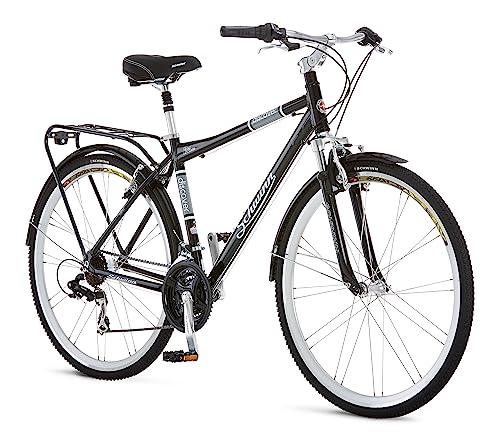
The Schwinn Discover is a classic comfort hybrid, and it is the pick we recommend first for anyone whose riding is mostly paved paths, city streets and bike trails. It pairs an aluminum city frame with a suspension fork, a padded saddle and a suspension seat post, so rough pavement and small bumps are absorbed before they reach you. The swept-back handlebar and adjustable stem put you in an upright, relaxed position with a clear view of traffic, which makes it a natural choice for commuting and for riders returning to cycling after time away.
Its 21-speed SRAM grip shifter and rear derailleur give you a wide spread of gears for flat cruising and for climbing gentle hills without strain. Twist the grip and the gear changes, which is intuitive even if you have not ridden for years. Promax alloy linear pull brakes provide reliable stopping power, and the alloy crank and ahead stem keep the bike feeling solid rather than flexy under pedaling.
Practical details are where the Discover earns its place. Full front and rear fenders keep spray off you and your clothes, a rear cargo rack carries a bag or groceries, and the 700c wheels with 38 millimetre tires roll smoothly on pavement while still coping with packed dirt paths. Step-through and step-over frames are available, so riders of different heights and preferences can find a comfortable fit. This is not a racing bike and it is not built for rough mountain trails, and it should not be judged as one. For the daily riding most people actually do, it is a well-judged, comfortable and practical machine, and it is the most versatile of the two picks here.
Schwinn Loop Folding Bike
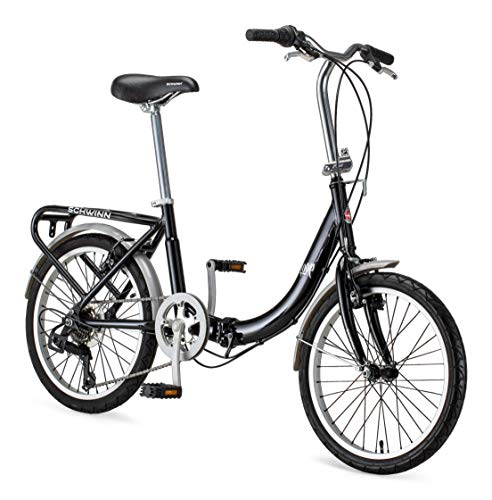
The Schwinn Loop is a different kind of answer to the same question, and it is the pick for riders whose biggest problem is not speed but space. It folds into a compact package that fits in a car boot, under a desk, in a small flat or on public transport, and it comes with a heavy-duty nylon storage bag for carrying it once folded. If you live in a small apartment, commute by train, or take a bike on holiday in a motorhome, that folding ability changes what is possible.
On the road, the Loop is a straightforward city bike. A 7-speed twist shifter gives smooth, reliable gear changes for flat and gently rolling streets, and front and rear linear pull brakes provide secure stops and precise speed control. The 20-inch alloy wheels with smooth-rolling street tires are nimble in traffic and around tight corners, and the frame fits riders from about four feet four inches to six feet four inches tall. A rear carrier rack is included, and full-wrap fenders keep you cleaner on damp roads.
Be clear about the trade-offs before choosing it. This is a partial fit for the general best-bike question: its small wheels, single front chainring and seven gears make it slower and less suited to long rides, steep hills or rough trails than a full-size hybrid such as the Discover. It is a commuter and a space-saver first, and a long-distance road bike it is not. If your rides are short city trips and storage is the deciding factor, it is an excellent choice. If you plan regular rides of an hour or more, choose the Discover instead.
What to Check Before You Buy
Before you place an order, run through a short checklist that catches the mistakes buyers most often regret. First, confirm the frame size against the maker’s chart using your height and inseam, and confirm whether you are ordering a step-over or a step-through frame. Second, check the wheel size and tire width, because they decide how the bike rides and what replacement tires will fit.
Third, read the listing carefully to see what is included. Fenders, a rack, a kickstand and a carrying bag are not standard on every bike, and their absence is not a fault, only a cost to plan for. Fourth, confirm the assembly required and whether you have the tools and confidence to fit the front wheel, handlebars, pedals and saddle, or whether a local shop should do the final build and safety check. Fifth, check the return policy and the warranty, and keep the box and packaging until you have ridden the bike and confirmed the size is right.
Finally, think about where the bike will live. A bike stored indoors lasts longer and is less likely to be stolen, while a bike left outside needs a strong lock and regular cleaning. A folding bike solves storage neatly, a hybrid needs a hallway, garage or shed, and either choice benefits from a covered spot out of direct rain.
FAQ
Is a bike in the sub-thousand range good enough for regular riding?
Yes, for most riders. Bikes in this band use aluminum frames, reliable gear systems and proven brake designs that handle commuting, fitness rides and weekend paths well. They are heavier and simpler than premium machines, and they lack the refined components of a racing bike, but for regular riding of an hour or two they are more than capable. Fit and maintenance matter more than the badge on the frame.
Should I choose a hybrid, a road bike or a mountain bike?
Choose by terrain. A hybrid suits mixed paved riding and light gravel, and it is the best default for most buyers. A road bike suits smooth pavement and longer, faster rides, but its narrow tires and dropped handlebars feel less comfortable for casual riding. A mountain bike suits rough trails and steep, loose surfaces, but its knobby tires and suspension feel slow on pavement. If you ride mostly on roads and paths, start with a hybrid.
What size bike do I need?
Use the maker’s sizing chart with your height and inseam, and do not guess from a friend’s bike. Frame sizes are measured differently between makers, so a medium from one brand is not the same as a medium from another. If you fall between two sizes, the smaller frame is usually the safer choice for comfort and control, and a longer seat post and adjustable stem can fine-tune the fit.
Do I need disc brakes?
Not necessarily. Rim brakes work well in dry conditions and are simple to maintain, while disc brakes give more consistent stopping in wet weather and on long descents. If you ride in rain, carry loads, or descend steep hills regularly, disc brakes are worth having. If you ride mostly in dry weather on flat routes, good rim brakes are perfectly adequate.
Can a folding bike replace a full-size bike?
For short city trips, yes. A folding bike is easy to store, carry and combine with other transport, and it rides well on flat streets. For long rides, steep hills or rough surfaces, a full-size hybrid is the better tool, because its larger wheels roll more efficiently, its gear range is wider and its riding position is more comfortable over distance. Choose the folding bike for convenience, not for speed.
Bottom Line
The best bike for less than 1000 is the one that fits you, suits your roads and gets ridden every week. For most riders, that bike is the Schwinn Discover, a comfortable, practical hybrid with wide gearing, fenders and a rack already fitted. For riders who need a bike that folds away, the Schwinn Loop is the sensible alternative, with the clear understanding that it trades long-distance comfort for storage convenience. Measure yourself, check the frame size, and choose for the riding you will do most often rather than the riding you imagine. That simple discipline will do more for your enjoyment than any single component on the specification sheet.
Disclosure: As an Amazon Associate, we may earn from qualifying purchases.