Key takeaways
- Searching for the best bike for century rides 2? These endurance road bikes offer comfortable geometry, wide tire clearance and handling for 100-mile days.
A century ride is a 100-mile ride, and it asks far more of a bicycle than a quick loop around the neighborhood ever will. Finding the best bike for century rides 2 means looking past flashy race machines and focusing on the things that matter at mile 70, when your shoulders are tired and the road surface turns rough. The right bike for a century keeps you comfortable, carries enough food and water, shifts cleanly when your legs are heavy, and stops with confidence on a long descent.

Quick answer: the best bike for a century ride is an endurance road bike with a relaxed, upright riding position, clearance for tires of 28mm or wider, a compact crankset with a wide-range cassette for climbing, and disc brakes for consistent stopping. Fit matters more than frame material, so choose the size that matches your height and reach.
Quick Picks
Our Short List of 3
All 3 Picks at a Glance
| Product | Specs | Action |
|---|---|---|
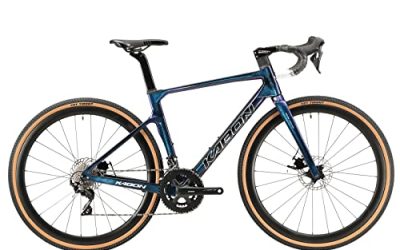
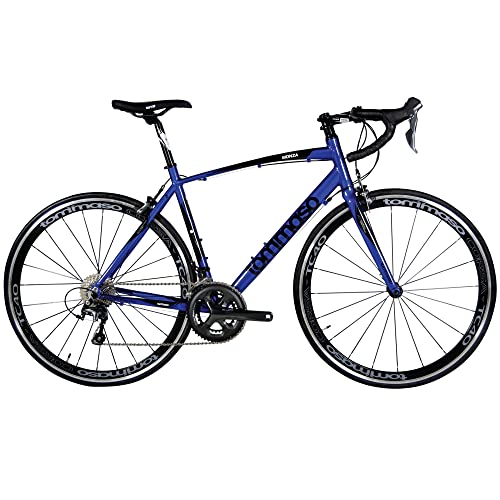
| Tommaso Monza Endurance Road Bike | Check price on Amazon | |
| SAVADECK Carbon Disc Road Bike with Shimano Sora | Check price on Amazon | |
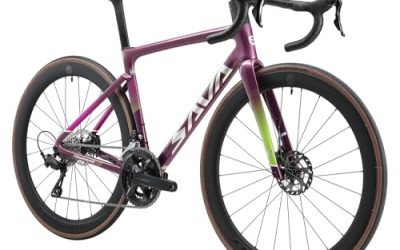
 SAVADECK Carbon Road Bike with Shimano 105 R7120 | Check price on Amazon |
How to Choose
Endurance Geometry and Fit
Endurance geometry is the single most important feature on a century bike. Compared with a race bike, an endurance frame has a taller head tube, a shorter reach, and a longer wheelbase. That combination puts your torso in a more upright position, takes weight off your hands and lower back, and makes the steering calmer when you are tired. A bike that feels fast and aggressive for an hour can feel punishing by hour five, so comfort should win over aerodynamics for a century.
Fit is personal, and no geometry chart replaces sitting on the bike. Check the manufacturer’s size chart against your height and inseam, and pay attention to stack and reach figures if they are published. If you fall between two sizes, the smaller frame usually gives you more room to adjust with the stem and seatpost. Soreness in the neck, numb hands, or knee pain are usually fit problems before they are fitness problems.
Tire Clearance and Comfort
Tires are the cheapest comfort upgrade on any bike, and tire clearance decides how far you can take that upgrade. For a century, look for a frame and fork that accept tires of at least 28mm, and wider if you ride rough roads. Wider tires run at lower pressure, absorb chipseal and small cracks, and reduce the constant vibration that wears down your hands and shoulders. They also grip better in corners and on damp roads.
Many of the bikes sold online still ship with narrow 25mm tires, so check the listed tire size and the maximum clearance before you buy. If the bike you like only clears narrow tires, you can still ride a century on it, but you will feel more of the road. Tubeless-ready wheels are a useful bonus, since they allow lower pressures and seal small punctures, but they are not essential.
Gearing for Long Climbs
A century route almost always includes hills, and the gearing that feels generous on flat ground can feel very different on the third long climb of the day. A compact crankset, typically 50/34T, paired with a wide-range cassette such as 11-32T gives you a low gear small enough to spin up steep grades without grinding. Spinning a lower gear saves your knees and keeps your legs fresher for the final miles, which is exactly where most century riders struggle.
Count the speeds, but pay more attention to the range. An 18-speed drivetrain with a sensible low gear can serve a century rider better than a 24-speed setup with a tall bottom gear. Shimano Claris, Sora, Tiagra, and 105 are all proven road groupsets. If your route climbs, prioritize the lowest gear over the number of speeds on the box.
Brakes: Disc vs Rim
Brakes matter more on a century than on a short ride because you will descend when your hands are tired and the road may be wet. Disc brakes, especially hydraulic disc brakes, give stronger and more consistent stopping in rain and on long descents, and they keep working well as the pads wear. They also free the wheel rims from braking duty, which allows wider tires.
Rim brakes are lighter, simpler, and easier for a home mechanic to adjust, and they are perfectly adequate for a century on dry roads with moderate descents. Their weakness shows up in wet weather and on long, steep descents, where stopping distances grow and your hands work harder. If you ride in a rainy climate or your century route includes serious descending, disc brakes are the safer choice.
Frame Material and Weight
Carbon fiber is the most popular frame material for endurance road bikes because it can be shaped to absorb vibration while staying stiff where power is transferred. A carbon frame and fork smooth out rough roads in a way that aluminum alone rarely matches, and that damping effect is noticeable over 100 miles. Carbon bikes also tend to be lighter, which helps on climbs.
Aluminum is heavier and transmits more road buzz, but it is durable, affordable, and easy for any shop to work on. An aluminum frame paired with a carbon fork is a proven compromise: the fork takes the edge off the front end while the frame keeps the build sturdy and serviceable. Do not chase the lightest frame at the expense of comfort.
Carrying Food, Water and Spares
A century is as much a fueling challenge as a riding challenge, and your bike needs to carry what you need. Look for at least two bottle cage mounts on the frame, and check whether the frame has mounts for a top tube bag or a small frame bag. These storage points let you keep gels, bars, and a phone within easy reach instead of stuffed in a jersey pocket. A saddle bag should hold a spare tube, a multi-tool, tire levers, and a pump or inflator.
Plan your nutrition before the ride, not during it. Most riders need to eat and drink regularly from the first hour, long before hunger or thirst appears. A bike with enough mounts and a comfortable position that lets you eat and drink while riding makes that discipline much easier. On an unsupported century, carrying two large bottles becomes a deciding factor.
Sizing, Assembly and the First Shakedown Ride
Bikes bought online usually arrive mostly assembled, and that final assembly step matters more than many buyers expect. Check the listing for how much assembly is required, and whether the seller recommends a professional build. At a minimum, the handlebars, front wheel, seatpost, and pedals need correct installation and torque, the brakes need adjustment, and the gears need indexing. A local bike shop can check all of this in a single visit.
Never ride a century as the first long ride on a new bike. Take at least two or three shorter shakedown rides first: a gentle ride to check fit and shifting, then a longer ride of two or three hours to test comfort, saddle, and hand positions. Note anything that aches or rubs, and fix it before the event. New shoes, a new saddle, or new shorts should also be broken in ahead of time.
The Best best bike for century rides 2 Reviewed
Tommaso Monza Endurance Road Bike
The Tommaso Monza is the most century-focused bike in this roundup, and it earns that position with endurance geometry rather than exotic materials. Its 6061 aluminum frame is paired with a carbon fork and a carbon seatpost, a combination that takes the sting out of rough roads while keeping the bike sturdy and serviceable.
The drivetrain is a full Shimano Tiagra 4700 2×10 setup with a 50/34T compact crankset and an 11-32T cassette. That gearing is well judged for century riding: the compact crank keeps the top end useful on flat stretches, while the 32-tooth largest cog gives you a genuinely low gear for long climbs. Tiagra shifting is smooth and reliable, and because it is a widely used Shimano groupset, any bike shop can service it. The bike is listed at 21.6 pounds, which is respectable for an aluminum endurance bike, and it comes in a real range of sizes, including larger frames up to 60cm.
Partial fit to note: the Monza uses rim brakes rather than disc brakes, so stopping in wet weather and on long descents takes more hand effort. It also ships with narrow 700x25C tires and limited clearance for wider rubber, so riders on rough roads should plan a tire swap to the widest size the frame accepts. The stock saddle has very little padding, and many riders will want to replace it before a century. Even with those caveats, the Monza is the best match in this list for a rider buying their first dedicated century bike: comfortable geometry, proven Shimano parts, and a build that any shop can maintain.
SAVADECK Carbon Disc Road Bike with Shimano Sora
The SAVADECK Carbon Disc Road Bike is the most affordable way into a carbon frame with disc brakes in this roundup. The T800 carbon fiber frame, fork, and seatpost keep the listed weight to 9.6 kg, and the carbon construction damps road vibration better than aluminum. Fully internal cable routing keeps the bike tidy, and the tapered head tube helps it track straight on fast descents.
The Shimano Sora R3000 18-speed drivetrain covers the essentials: Sora shift levers, front derailleur, and rear derailleur, with a 50-34T compact crankset. Sora sits below Tiagra and 105 in the Shimano range, so shifting is a little heavier and less refined, but it is a proven, durable groupset that any shop can service. Disc brakes are the real advantage here, giving consistent stopping in wet conditions and on long descents, and the bike ships with Continental 700x25C tires, a known brand rather than an unbranded tire.
Partial fit to note: this is styled as an entry-level race disc bike, so its geometry is more aggressive than a dedicated endurance frame, and the 25mm tires are narrow for century comfort. The Sora drivetrain is also the most basic in this roundup, and riders who climb a lot may want a wider-range cassette than the stock setup. Check the exact size and component listing before ordering, since SAVADECK sells several similar-looking models with different drivetrains.
SAVADECK Carbon Road Bike with Shimano 105 R7120
The SAVADECK Carbon Road Bike with Shimano 105 R7120 is the performance pick of this roundup. Its full carbon frame is built around the Shimano 105 R7120 24-speed groupset, a 2×12 mechanical drivetrain with hydraulic disc brakes. Shifting is crisp and precise, the 12-speed cassette gives closely spaced gears so you can always find the right cadence, and the hydraulic disc brakes deliver strong, controlled stopping with little hand effort.
The bike is listed at 8.8 kg, the lightest in this roundup. The 11-36T cassette gives a low gear that handles steep climbs without forcing you out of the saddle, and the ergonomic 105 shift levers are comfortable to hold from the hoods, where most century riders spend most of their time. The bike arrives largely pre-assembled.
Partial fit to note: this is a race-oriented build, not a dedicated endurance bike. The geometry is lower and longer than a relaxed endurance frame, and the stock tires are narrow, so riders who prioritize comfort should plan to fit the widest tires the frame allows and consider a shorter stem or a spacer adjustment to raise the handlebars. If you are flexible, experienced on a drop-bar bike, and want the best shifting and braking in this list, it will reward you. If you want maximum comfort above all else, the Monza or the Canyon below will suit you better.
Canyon Roadlite CF 8
The Canyon Roadlite CF 8 is the flat-bar option in this roundup, and it deserves its place because not every century rider wants drop handlebars. Its carbon frame and carbon fork are paired with a Shimano 105 drivetrain and hydraulic disc brakes, a component level that is rare on a flat-bar bike. Canyon describes the geometry as vibration-damping and built for all-day comfort.
The 105 drivetrain gives 11-speed shifting with a wide gear range for climbs and flat stretches, and the hydraulic disc brakes provide consistent stopping in all weather. The upright flat-bar position is comfortable for riders with limited flexibility, neck trouble, or anyone who prefers the control and visibility of a flat bar. The bike is available in sizes from 2XS to XL, so finding a fit is straightforward.
Partial fit to note: this is a hybrid-style bike with a flat handlebar, not a drop-bar road bike. Over 100 miles, the single hand position of a flat bar can cause hand numbness and wrist fatigue, because you cannot move between the hoods, the drops, and the tops the way you can on a drop-bar bike. It is also less aerodynamic, so you will work harder into a headwind. For a first century on a flatter route, or for a rider who cannot ride drop bars comfortably, the Roadlite CF 8 is a strong choice. For a hilly or windy century, a drop-bar endurance bike will be the better tool.
What to Check Before You Buy
Before you order any century bike, confirm the frame size against the manufacturer’s chart using your height and inseam, and check that your preferred size is actually in stock on the listing you are buying from. Listings for bikes often cover several sizes and colors under one product page, and availability can vary sharply between them. Confirm the exact groupset, brake type, and tire size on the listing, since similar models can differ.
FAQ
What exactly is a century ride?
A century ride is a 100-mile ride, usually completed in a single day. Organized centuries often have rest stops with food and water, marked routes, and support vehicles, while solo centuries are self-supported. Most riders take between five and eight hours of moving time, so comfort, fueling, and pacing matter as much as speed.
Do I need a carbon bike for a century?
No. Carbon is comfortable and light, but many riders finish centuries on aluminum bikes with a carbon fork. Fit, tire width, gearing, and saddle comfort matter more than frame material.
How wide should my tires be for a century?
Tires of 28mm or wider are a good target for most century riders, with 30mm or 32mm suiting rough roads even better. Wider tires run at lower pressure and absorb vibration, which reduces fatigue over 100 miles. Check your frame and fork clearance before buying wider tires.
Can I ride a century on a flat-bar bike?
Yes, and many riders do, especially on flatter routes. The main drawback is the single hand position, which can cause numbness over long distances. Bar ends or ergonomic grips can add hand positions, but a drop-bar bike gives you more positions naturally.
How should I prepare a new bike before a century?
Ride it at least two or three times before the event, building up to a two- or three-hour ride. Check the fit, saddle comfort, shifting, and brakes on each ride, and fix anything that aches or rubs. Break in new shoes, shorts, and a new saddle ahead of time, and test your food, drink, and storage setup on a long training ride.
Bottom Line
The best bike for century rides 2 is the endurance road bike that fits you, carries your food and water, and keeps you comfortable from the first mile to the hundredth. The Tommaso Monza is the best match for most first-time century riders, with relaxed geometry, a carbon fork, and proven Tiagra gearing. The SAVADECK Carbon Disc Road Bike brings carbon and disc brakes within reach, while the SAVADECK 105 R7120 model offers the best shifting and braking for riders who want performance. The Canyon Roadlite CF 8 is the pick for riders who prefer a flat bar and an upright position. Whichever bike you choose, size it carefully, fit wider tires if the frame allows, get a professional assembly check, and ride it on several long training rides before your century.
Disclosure: As an Amazon Associate, we may earn from qualifying purchases.