Key takeaways
- Compare the best semi-automatic hi-fi turntables for stereo listening rooms, with auto-lift and auto-stop decks, cartridges and phono stages compared.
Introduction
The best semi-automatic hi-fi turntables for stereo listening rooms strike a balance that neither a fully manual deck nor a fully automatic deck quite manages. You cue the tonearm by hand, so you choose the track and control the drop, and when the side ends the deck takes over, lifting or stopping the stylus before it can sit spinning in the run-out groove. In a room built for listening, that matters. You can stay in your chair, let the record play through, and trust the turntable to protect the stylus and the record when the music finishes.


Quick answer: For most stereo listening rooms, the Denon DP-400 is the strongest starting point, because it combines true auto-lift with a speed sensor, three speeds, and a switchable built-in phono stage. If your room leans toward wireless speakers, the TEAC TN-180BT-A3 adds Bluetooth and an auto-return tonearm. If you want the best cartridge in this group, the Fluance RT81+ Elite pairs an Audio-Technica AT-VM95E cartridge with an acrylic mat. The Fluance RT80 Classic is the straightforward entry point for a first listening room.
A listening room rewards a deck that is quiet, stable, and easy to live with: a platter that holds speed, a plinth that resists speaker vibration, a tonearm that tracks cleanly, and a phono stage that matches your amplifier. The four decks below are all belt-drive turntables with a built-in phono preamplifier, so each one connects to a stereo amplifier or powered speakers without extra equipment.
Quick Picks
Our Short List of 3
- Drive type: Belt drive with a weighted platter and speed auto sensor.
- Cartridge: Pre-mounted moving-magnet cartridge on a universal headshell.
- Phono stage: Built-in switchable phono equalizer.
- ASIN: B07HCGYQ5K — Check on Amazon
- Drive type: Belt drive with an anti-resonant platter and acrylic mat.
- Cartridge: Audio-Technica AT-VM95E with an elliptical stylus.
- Phono stage: Built-in switchable phono preamplifier.
- ASIN: B0C8ZF4F4L — Check on Amazon

- Drive type: Belt drive with a high-density MDF cabinet.
- Cartridge: Supplied moving-magnet cartridge.
- Phono stage: Built-in moving-magnet phono preamplifier.
- ASIN: B0915DYXS8 — Check on Amazon
All 4 Picks at a Glance
| Product | Specs | Action |
|---|---|---|
| Denon DP-400 |
| Check price on Amazon |
| Fluance RT81+ Elite |
| Check price on Amazon |
| TEAC TN-180BT-A3 |
| Check price on Amazon |
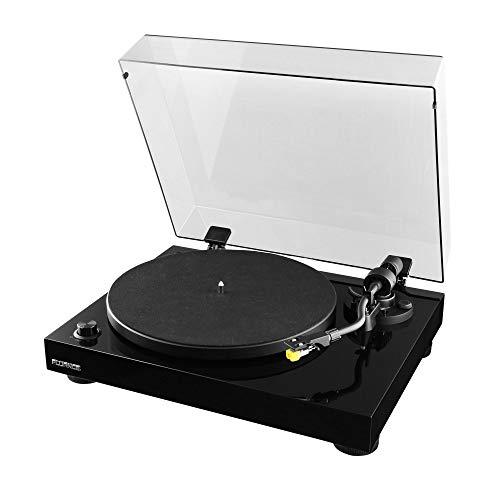 Fluance RT80 Classic |
| Check price on Amazon |
How to Choose
Semi-automatic action: auto-lift, auto-stop, and auto-return
Semi-automatic is not one mechanism. On some decks the tonearm lifts at the end of the side and the motor stops. On others the platter simply stops turning while the arm stays where it is. On others still the arm returns to its rest. Auto-lift is the most protective action, because the stylus leaves the groove entirely. Auto-stop protects the record from endless rotation but leaves the stylus in the run-out groove until you walk over. Auto-return does both jobs and resets the deck for the next side. Decide which action you need before comparing anything else, because it shapes how the deck behaves every time you listen. For full sides listened to from a chair, auto-lift or auto-return is the more relaxing choice.
Drive type: belt drive or direct drive
A belt drive isolates the motor from the platter with an elastic belt, which keeps motor vibration away from the stylus and suits a quiet room. The belt is a wear item that needs replacing after years of use. A direct drive couples the motor to the platter, which gives fast, accurate speed and no belt to change, but the motor sits closer to the record. All four decks here are belt-drive models, the common choice for a home listening room.
Tonearm and cartridge
The tonearm and cartridge decide more of the sound than any other part of the turntable. Look for an adjustable counterweight and anti-skate control, which let the arm be set for the supplied cartridge, and a cueing lever, which lowers the stylus gently onto the record. A removable headshell makes cartridge changes straightforward later. An elliptical stylus traces the groove more closely than a conical stylus, which usually means cleaner highs and less distortion on complex passages. The supplied cartridge is a starting point, not a lifetime commitment, so a standard mount and a removable headshell keep the upgrade path open.
Phono stage: built-in or separate
A phono stage, also called a phono preamplifier, raises the tiny signal from the cartridge to line level and applies the equalization that records need. A built-in switchable phono stage is the flexible option: switch it on to connect to a line input or powered speakers, and switch it off to use the phono input on your amplifier or a separate phono stage later. A built-in stage that cannot be switched off locks you into its sound. All four decks here have a built-in phono stage, and three let you switch it off, which keeps the deck useful if your amplifier changes. If you already own a separate phono stage you love, confirm the switch before you buy.
Platter, plinth, and isolation
The platter and plinth set the noise floor of the deck. A heavier platter resists speed wobble, and a solid plinth made from medium-density fibreboard or engineered wood resists vibration better than a light plastic chassis. A rubber or acrylic mat damps the record, adjustable feet help level the deck, and a dust cover keeps dust off the stylus. Placement matters as much as construction: a turntable sharing a shelf with speakers will pick up vibration no matter how well it is built. Give the deck its own level surface away from the speakers, and the platter and plinth can do their job.
Speeds and connectivity
Most collections need 33 1/3 and 45 RPM. A 78 RPM setting suits 78 RPM records only, and it usually needs a different stylus, so treat it as a bonus for a specific collection. On connectivity, a wired RCA output to an amplifier or powered speakers is the standard path for a listening room and the purest one. Bluetooth output is a genuine convenience when the room uses wireless speakers or headphones, but it adds a wireless stage between the record and the speaker. USB output matters only if you plan to digitize records. Match the connections to the system in the room, not to a feature list.
The Best Semi-Automatic Hi-Fi Turntables for Stereo Listening Rooms Reviewed
Denon DP-400
- Drive type: Belt drive with a weighted platter and speed auto sensor.
- Cartridge: Pre-mounted moving-magnet cartridge on a universal headshell.
- Phono stage: Built-in switchable phono equalizer.
- ASIN: B07HCGYQ5K — Check on Amazon
The Denon DP-400 is the most complete semi-automatic deck in this group, and the best fit for most stereo listening rooms. It is a belt-drive turntable with a weighted platter and a speed auto sensor that maintains accurate rotation, and it plays 33 1/3, 45, and 78 RPM records. The listener lowers the tonearm manually, and at the end of the side the S-shaped curved tonearm lifts automatically and the motor stops. That auto-lift action is the defining feature: the stylus leaves the groove on its own, so a record can finish while you are seated across the room.
The curved tonearm is designed to keep the tracking angle consistent across the record, and the removable universal headshell makes a later cartridge change simple. The built-in phono equalizer can be switched off, so the DP-400 connects to a line input or powered speakers with the stage on, or to a phono input or separate stage with it off. Three speeds cover LPs, singles, and 78 RPM records without a separate accessory. The controls stay analog and the signal path stays wired, which fits a listening setup built around an amplifier and speakers.
There are limits to note. There is no Bluetooth or USB output, so the DP-400 is a wired deck only, and the listener still cues the arm by hand at the start of each side. The pre-mounted cartridge is a capable starting point, and keen listeners may plan a cartridge upgrade once the deck is settled in. For a conventional amplifier and speakers, though, the combination of auto-lift, speed sensing, three speeds, and a switchable phono stage is hard to fault.
Fluance RT81+ Elite
- Drive type: Belt drive with an anti-resonant platter and acrylic mat.
- Cartridge: Audio-Technica AT-VM95E with an elliptical stylus.
- Phono stage: Built-in switchable phono preamplifier.
- ASIN: B0C8ZF4F4L — Check on Amazon
The Fluance RT81+ Elite is the pick for listeners who want the best cartridge in this group and a deck that can grow with the system. It is a belt-drive turntable with an Audio-Technica AT-VM95E cartridge, an acrylic platter mat, and an anti-resonant platter, and it plays 33 1/3 and 45 RPM records through a balanced aluminum S-type tonearm.
The AT-VM95E is the standout here. Its elliptical stylus traces the groove more closely than the conical styli on entry-level decks, and it sits on a removable bayonet headshell, so a later move within the VM95 range is a stylus swap rather than a full cartridge change. The tonearm has an adjustable counterweight, anti-skate control, and a cueing lever, which gives the setup a proper hi-fi feel. Adjustable isolation feet help level the deck on a shelf or cabinet, and the wooden plinth and dust cover complete a conventional hi-fi presentation.
One partial fit needs stating plainly. The automatic action here is auto-stop: the platter halts at the end of a side, but the tonearm does not lift or return. That still counts as semi-automatic, because the deck takes over at the end of the record, but it is the lightest form of it, and the stylus stays in the run-out groove until you lift the arm yourself. There is no Bluetooth or USB output, and no 78 RPM speed. If you sit near the deck and value the cartridge above all else, those limits are easy to live with. If you want the arm to lift itself, the Denon DP-400 is the better match.
TEAC TN-180BT-A3
- Drive type: Belt drive with a high-density MDF cabinet.
- Cartridge: Supplied moving-magnet cartridge.
- Phono stage: Built-in moving-magnet phono preamplifier.
- ASIN: B0915DYXS8 — Check on Amazon
The TEAC TN-180BT-A3 is the pick for a listening room that mixes wired and wireless listening. It is a belt-drive turntable with an auto-return tonearm, a built-in Bluetooth transmitter, and an integrated moving-magnet phono preamplifier, and it plays 33, 45, and 78 RPM records.
The auto-return tonearm sets this deck apart in daily use. You cue the start manually, and at the end of playback the arm returns to its rest on its own, so the deck is ready for the next side without a trip across the room. Bluetooth output connects to wireless speakers and headphones, while phono and line outputs cover a wired connection to an amplifier or powered speakers, so the same deck serves a wired hi-fi system and a wireless setup. A dust cover, rubber mat, EP adapter, RCA cable, and AC adapter are included in the box.
Two partial fits deserve a clear note. First, the tonearm tracking is set for the supplied cartridge rather than offering the full manual adjustment range of the other decks here, so the upgrade path is narrower. Second, Bluetooth is a convenience, and a wireless path between record and speaker is not the purest route for a dedicated listening room, even when it is useful elsewhere. Treat the TN-180BT-A3 as the flexible choice: strongest when the room uses wireless speakers alongside an amplifier, and less of a purist pick than the Denon or the Fluance RT81+ Elite when the system is wired only.
Fluance RT80 Classic
- Drive type: Belt drive with an aluminum platter and felt mat.
- Cartridge: Audio-Technica AT91.
- Phono stage: Built-in switchable phono preamplifier.
- ASIN: B01F2B3FKI — Check on Amazon
The Fluance RT80 Classic is the straightforward entry point into hi-fi vinyl for a first listening room. It is a belt-drive turntable with an Audio-Technica AT91 cartridge and a built-in switchable phono preamplifier, playing 33 1/3 and 45 RPM records through a balanced aluminum S-type tonearm with an adjustable counterweight and a cueing lever.
The RT80 covers the fundamentals well. Auto-stop switches the platter off at the end of a record, so the stylus does not keep turning in the run-out groove. The built-in preamplifier can be switched on for powered speakers or a line input, or off for a phono input, which keeps the deck flexible as the system changes. A dust cover, RCA cable with ground wire, and 45 RPM adapter are included, and the bayonet headshell supports cartridge changes later, so the deck can grow even though it starts simple. The engineered wood plinth and aluminum platter give it a conventional hi-fi layout at the entry level of the Fluance range.
The limits are the ones you would expect at this level. The AT91 cartridge is simpler than the AT-VM95E on the RT81+ Elite, with a conical stylus, so it is the first thing to upgrade when the room and the system are ready. Auto-stop does not lift or return the arm, and there is no wireless output and no 78 RPM speed. None of that disqualifies the RT80 for a first listening room. It is a starting point with a clear upgrade path, not a final destination.
What to Check Before You Buy
A turntable is part of a system, so check the system before the deck. Confirm the amplifier has a phono input or a spare line input, and whether the deck’s built-in phono stage can be switched off if you plan to use a separate stage. Measure the shelf: the deck needs a level surface with room for the dust cover to open fully, away from the speakers so vibration does not reach the stylus. Check the cartridge mount and headshell, because a standard mount and a removable headshell make a future cartridge upgrade simple. If the collection includes 78 RPM records, confirm the deck plays them and plan for the different stylus they need. Finally, read the end-of-side action on the listing: auto-lift, auto-stop, and auto-return sound similar, but they behave differently at the end of every side, and that behavior is the reason to buy a semi-automatic deck.
Frequently Asked Questions
What does semi-automatic mean on a turntable?
Semi-automatic means you cue the tonearm by hand at the start of a record, and the deck takes over at the end of the side. It lifts the tonearm, stops the platter, or returns the arm to its rest, depending on the model. It keeps manual control over track selection while protecting the stylus and the record when the music finishes.
Is a semi-automatic turntable good for a dedicated listening room?
Yes. A listening room is built around sitting through full sides, and a semi-automatic deck lets you stay seated when a side ends instead of hurrying across the room. Manual cueing keeps track selection in your hands, while the end-of-side mechanism handles the moment you are least likely to be near the deck.
Do I need a separate phono preamp?
Not with the decks in this guide, because all four have a built-in phono stage. A separate stage becomes worth considering only when the rest of the system is strong enough to reveal its difference, and then you need a deck whose built-in stage can be switched off. The Denon DP-400 and both Fluance decks allow that.
Can I use a semi-automatic turntable with powered speakers?
Yes, if the deck has a built-in phono preamplifier. All four decks here list a built-in phono stage, so they connect to powered speakers or to a line input on an amplifier without extra equipment. Switch the built-in stage off only when you connect to a phono input or a separate phono stage.
Belt drive or direct drive for a listening room?
Belt drive is the common choice for a home listening room, because the belt isolates the motor from the platter and keeps motor vibration away from the stylus. Direct drive gives faster, more accurate speed and no belt to replace, which suits DJ use and heavy daily use. For quiet, seated listening, belt-drive isolation is usually the more valuable trait.
Bottom Line
The best semi-automatic hi-fi turntables for stereo listening rooms all share the same idea: manual cueing at the start, automatic protection at the end, and a quiet belt-drive deck in between. The Denon DP-400 is the strongest all-round choice, with auto-lift, a speed sensor, three speeds, and a switchable phono stage. The Fluance RT81+ Elite is the choice for listeners who want the best cartridge and the clearest upgrade path, with the understanding that its automatic action is auto-stop rather than auto-lift. The TEAC TN-180BT-A3 is the flexible choice for rooms that mix wired and wireless listening, with a genuine auto-return tonearm. The Fluance RT80 Classic is the honest entry point, simple to set up and ready to grow with a cartridge change later. Match the end-of-side action and phono stage to the amplifier and speakers in the room, and the deck will fit the listening habit, not just the shelf.
Disclosure: As an Amazon Associate, we may earn from qualifying purchases.