Our Short List of 3
All 5 Picks at a Glance
| Product | Specs | Action |
|---|---|---|
 1. Scotts Turf Builder Grass Seed Dense Shade Mix, 5.6 lb | Check price on Amazon | |
 2. Outsidepride Legacy Fine Fescue Grass Seed Mix, 5 lb | Check price on Amazon | |
 3. Pennington The Rebels Tall Fescue Shady Grass Seed Mix, 3 lb | Check price on Amazon | |
 4. Pennington Smart Seed Dense Shade Grass Mix, 3 lb | Check price on Amazon | |
 5. GreenView Pure Grass Seed Sun and Shade Mixture, 20 lb | Check price on Amazon |
Key takeaways
- The best grass seed for shade in Georgia pairs tall and fine fescues for humid, tree-covered lawns. Compare five shade blends and fall seeding timing here.
As an Amazon Associate we earn from qualifying purchases.
Shade in Georgia is a harder problem than shade in a cooler state, because the grass has to survive two stresses at once. The tree canopy steals the light, and the Georgia summer then adds heat and humidity that thin, weak turf handles badly. A shaded patch in Atlanta, Athens, Macon, or the northern suburbs is usually sitting under oaks, pines, or a fence line, competing with tree roots for water while warm, damp air encourages disease in grass that is already growing slowly. The best grass seed for shade in Georgia is therefore not the seed that tolerates the deepest darkness in a laboratory sense. It is a shade-tolerant cool-season blend, built mainly on tall fescue and fine fescues, that can be sown in fall, establish during Georgia’s mild winter, and enter the following summer with deep roots already in place. This guide explains that Georgia logic first, then presents five seed bags that fit it, all of them grass seed blends sold for shady lawns.
Affiliate disclosure: This article contains affiliate links. If you buy through a link on this page, we may earn a commission at no additional cost to you.
Why Georgia Shade Lawns Are a Special Case
Georgia sits across the transition zone, the band of the country where neither cool-season nor warm-season grasses are comfortable all year. That single fact drives almost every recommendation in this guide.
Tall fescue is the workhorse. Turf-type tall fescue tolerates partial shade better than most lawn grasses, handles Georgia heat better than Kentucky bluegrass or perennial ryegrass alone, and develops deep roots that help it through dry spells between summer storms. In the northern half of the state and the Atlanta metro, tall fescue is the standard lawn grass for exactly this reason, and shaded areas lean on it even more heavily.
Fine fescues supply the shade tolerance. Hard fescue, Chewings fescue, and creeping red fescue are the grasses that keep growing where light is weakest. They have fine blades, modest fertilizer needs, and better low-light performance than tall fescue. Their weakness is traffic and summer stress, which is why the strongest Georgia shade products blend them with tall fescue instead of using them alone.
Warm-season grasses are the weaker shade answer. Many Georgia lawns in the middle and southern parts of the state are bermudagrass, zoysia, or centipedegrass. Bermuda needs full sun and thins quickly under trees. Zoysia tolerates light shade but still fades in moderate shade and is normally installed as sod or plugs rather than shade seed. Centipedegrass likewise prefers sun and performs poorly in deeper shade. For a homeowner trying to fix the bare ring under a tree, a fescue blend sown in fall is usually the more realistic seed purchase, with the honest caveat that fescue in the hotter, lower parts of Georgia may need fall overseeding to stay thick year after year.
Humidity changes the management. Warm nights and damp shade are favorable conditions for fungal disease in dense turf. Spacing waterings into deeper, less frequent sessions once the grass is established, mowing high, and avoiding heavy nitrogen in midsummer all matter more in Georgia than in a dry climate. Seed choice helps, but shaded Georgia turf still rewards careful watering.
Timing: Fall Is the Main Seeding Window
For fescue in Georgia, early fall is the season that decides success. Sowing in September into October in the northern half of the state, and a little later further south, puts germination into cooling soil while the soil is still warm enough for roots to grow. The seedlings then have autumn, winter, and spring to build a root system before the first summer of heat and humidity arrives.
Spring seeding is the weaker option. A fescue lawn sown in March or April may look promising by May and then thin badly in July, because its roots are still shallow when the heat arrives. Spring sowing also collides with the timing of many pre-emergent weed treatments, which can prevent grass seed from establishing. If a shaded area must be patched in spring, treat it as a temporary repair and plan a proper fall overseeding.
Practical fall steps are simple. Rake the shaded area to expose soil and remove leaf litter, because seed that lands on leaves or thatch rarely establishes. Consider a thin layer of compost or topsoil on bare clay, which is common in Georgia yards. Sow at the rate printed on the bag, keep the surface moist until germination, and keep fallen leaves from smothering the new seedlings through autumn.
How the Picks Were Chosen
Every pick below is a bag of grass seed marketed for shade, dense shade, or sun-and-shade lawns, and every pick is built on fescues, alone or with perennial ryegrass and Kentucky bluegrass as supporting grasses. No pick is a warm-season seed, a patch kit dominated by mulch, a fertilizer, or a sod product. Bag sizes and coverage figures are taken from each product’s Amazon listing as checked for this guide, and they vary widely, from small three-pound bags suited to one tree ring to a twenty-pound bag for a whole shaded yard. Read coverage as new-lawn and overseeding figures where the listing gives both, because confusing the two is the most common reason a bag runs out halfway across a yard.
One limit applies to every shade product in this guide, including all five picks. Dense shade still means some light. Areas receiving only a couple of hours of dappled light, or ground locked in building shadow all day, may not hold any turf grass permanently, and groundcover, mulch, or a shade garden bed is the honest answer there. The picks below are for lawns that receive at least roughly three to six hours of sun or strong filtered light, which covers most tree-shaded Georgia yards.
The 5 Best Grass Seed for Shade in Georgia
1. Scotts Turf Builder Grass Seed Dense Shade Mix, 5.6 lb
This is the most directly targeted pick for a Georgia homeowner with a clearly shaded section of lawn. The listing describes the mix as growing with as little as three hours of sunlight, and as a combination of grass seed, fertilizer, and soil improver containing what the brand calls Root-Building Nutrition. The 5.6-pound bag covers up to 465 square feet for a new lawn or 1,400 square feet for overseeding, according to the listing, which makes it a mid-size bag suited to a shaded side yard, a strip along a fence, or the ground under one or two mature trees rather than an entire large property.
The listing also describes medium drought resistance and medium to high durability, and gives the application window as spring or fall when soil temperatures are consistently between 60 and 75 degrees Fahrenheit or air temperatures are between 65 and 85 degrees. Translated into Georgia practice, that window points firmly at fall: late September and October air in much of the state sits in exactly that range while summer humidity is easing. The built-in fertilizer and soil improver simplify the job for a homeowner who does not want to coordinate separate starter fertilizer, though they also mean the bag contains less pure seed by weight than an uncoated blend. For a defined shaded problem area, this is the simplest first purchase in the group.
View it on Amazon: https://www.amazon.com/dp/B0BDJJY49Z
2. Outsidepride Legacy Fine Fescue Grass Seed Mix, 5 lb
Legacy is the pure fine-fescue option, and it is the pick for the shadiest, lowest-traffic corners of a Georgia yard. The blend combines three fine fescues: the manufacturer’s description gives 20 percent hard fescue, 40 percent Chewings fescue, and 40 percent creeping red fescue. Those are the grasses that hold on where light is weakest, and the blend is described for conditions from full sun through dense shade. The five-pound bag is listed as covering roughly 1,000 to 1,250 square feet for a new lawn and 2,000 to 2,500 square feet for overseeding in retailer summaries of the product.
Fine fescue brings trade-offs. The blades are fine and soft, the lawn needs less fertilizer and less mowing than tall fescue, and dry shade under trees is where this blend makes most sense. But a fine fescue area is not the place for a dog run or constant foot traffic, and in Georgia heat it benefits from being left taller and watered during dry spells. The listing title notes an OptiGrowth coating intended to support establishment. Choose this pick for a quiet, deeply shaded corner or tree-covered slope that is seen more than walked on, and pair it with a tall fescue pick for parts of the yard that get real use.
View it on Amazon: https://www.amazon.com/dp/B004MNATTS
3. Pennington The Rebels Tall Fescue Shady Grass Seed Mix, 3 lb
The Rebels pick is the tall-fescue specialist for shaded lawns that still get used. The listing presents it as a shady lawn mix built on the premium tall fescue varieties the Rebels line is known for, and the three-pound bag covers up to 750 square feet for overseeding an existing lawn and 250 square feet for starting a new lawn from scratch. That is a small, deliberate bag, sized for repairing the shaded half of a modest lawn or thickening the turf under a tree without buying seed that will sit in a garage losing viability.
Tall fescue is the right anchor for a working Georgia lawn because it tolerates the state’s heat better than the other cool-season grasses in these blends, roots deeply, and stands up to children and pets crossing the shaded area on the way to the rest of the yard. Pennington’s broader Rebels descriptions emphasize extended root growth and a darker, denser result than older tall fescue types such as Kentucky 31, and the shady mix applies that tall fescue base to areas with limited light. The honest limitation is light: tall fescue wants partial shade rather than the deepest shade, so this bag belongs where the canopy is high or the shade lasts only part of the day. In a fall overseeding program for an Atlanta-area fescue lawn, this is the pick that reinforces the main lawn where trees thin it, while a fine fescue blend handles the darkest corners separately.
View it on Amazon: https://www.amazon.com/dp/B0CCZX65XG
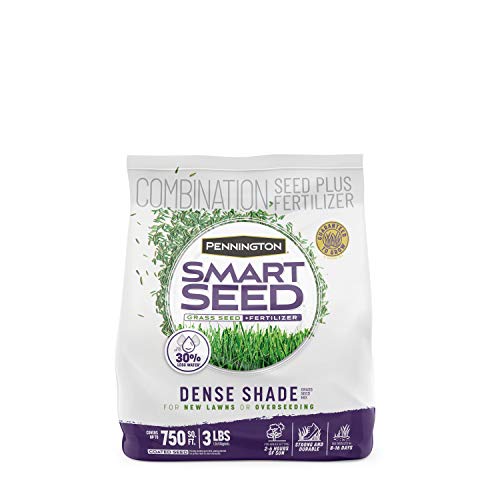
4. Pennington Smart Seed Dense Shade Grass Mix, 3 lb
This is the smaller bag of Pennington’s dense shade line, and it suits a Georgia homeowner with one stubborn shaded patch rather than a whole shaded yard. The Smart Seed dense shade formula is described by the brand as a mix of tall fescue and fine fescue requiring only two to six hours of sunlight, with seed and fertilizer combined in the bag, and results described in eight to sixteen days under the brand’s planting directions for the line. The three-pound size keeps the purchase proportionate to a single tree ring, a shaded strip beside a house, or the north side of a fence.
The two-to-six-hour light range is the headline here, because it reaches lower than most tall fescue products claim. In Georgia terms, that covers the yard where a two-story house shades the lawn in the morning and a canopy covers it in the afternoon, leaving a short midday window of real sun. The fertilizer in the bag helps new seedlings green up as they establish, which matters in fall when the homeowner wants visible progress before leaf fall complicates raking. As with other coated seed-and-fertilizer products, part of the bag weight is coating and fertilizer rather than seed, so coverage per pound is lower than a pure seed blend and the bag’s own directions should govern the rate. Plant this one in early fall, keep the patch moist through germination, and expect to judge it the following spring rather than in its first weeks.
View it on Amazon: https://www.amazon.com/dp/B08QCGQJT9
5. GreenView Pure Grass Seed Sun and Shade Mixture, 20 lb
The GreenView pick is the large-yard option. The listing describes a 20-pound bag covering up to 10,000 square feet, sold under the brand’s Fairway Formula line of pure seed mixtures. Descriptions of the mixture list elite cultivars of Kentucky bluegrass, perennial ryegrass, and fine fescues, which is a classic sun-and-shade architecture: the fine fescues carry the shaded sections, the ryegrass establishes quickly and gives early cover, and the bluegrass contributes density and spreading growth in the sunnier sections of the same lawn.
That architecture suits a common north Georgia pattern: a larger yard where light changes every few steps, open in the middle and shaded along the tree line and near the house. One mixture avoids visible seams between different grasses. Two cautions apply. Kentucky bluegrass is the least heat-tolerant component in Georgia, so this mixture makes most sense from Atlanta northward. And a twenty-pound bag is a commitment: measure the yard first, and store any remainder cool and dry for fall touch-ups.
View it on Amazon: https://www.amazon.com/dp/B07SJTT2Z3
Side-by-Side Comparison
| Pick | Main grasses from listing | Bag size | Coverage from listing | Best Georgia use |
|---|---|---|---|---|
| Scotts Dense Shade Mix | Shade mix with fertilizer and soil improver | 5.6 lb | 465 sq ft new, 1,400 sq ft overseeding | Defined shaded sections, side yards |
| Outsidepride Legacy | Hard, Chewings, and creeping red fescue | 5 lb | About 1,000 to 1,250 sq ft new | Deepest shade, low traffic |
| Pennington Rebels Shady | Tall fescue | 3 lb | 250 sq ft new, 750 sq ft overseeding | Shaded lawns that still get traffic |
| Pennington Smart Seed Dense Shade | Tall fescue and fine fescue with fertilizer | 3 lb | Small patch bag; follow bag rate | One stubborn low-light patch |
| GreenView Sun and Shade | Kentucky bluegrass, perennial ryegrass, fine fescues | 20 lb | Up to 10,000 sq ft | Large mixed-light yards in north Georgia |
The pattern in the table is the real buying rule. Match the grass to the light and the traffic first, then match the bag to the measured area. Buying a large bag of the wrong blend is a worse outcome than buying a small bag of the right one.
Keeping Shaded Fescue Alive Through a Georgia Summer
Establishment is only half the job in Georgia. The first summer after a fall seeding is when shaded fescue is won or lost, and a few habits decide it.
Mow high and never scalp a shaded area to tidy it. Taller grass keeps more leaf area working in low light and shades the soil surface. Water deeply and less often once the lawn is established, in the early morning, so blades dry during the day instead of staying wet through humid nights. Raise the canopy where possible: pruning lower limbs can add an hour or two of light, which is often the difference between thin turf and adequate turf. Finally, plan on overseeding again the next fall; in the transition zone, annual fall overseeding is normal maintenance for shaded fescue, not an admission that the first seeding failed.
What to Avoid
Avoid sowing fescue shade seed in late spring and expecting it to survive July; the calendar, not the seed, is usually the failure. Avoid bermudagrass seed for a shaded repair, because bermuda thins in shade regardless of how the bag is marketed. Avoid seed that lands on unprepared thatch or leaf litter, and avoid burying seed deeply, since grass seed needs light contact with soil and shallow placement. Avoid heavy summer fertilizer on shaded fescue, which pushes soft growth in the most disease-friendly weather of the year. And avoid judging a fall seeding in its first month; fescue blends that include fine fescue and bluegrass components can take two to three weeks to germinate fully, and the stand thickens considerably in spring.
Verdict
The best grass seed for shade in Georgia is a fall-sown fescue strategy, not a single magic bag. Choose the Scotts Dense Shade Mix for a clearly defined shaded section that needs seed, fertilizer, and soil improver in one product, Outsidepride Legacy for the deepest, quietest shade, the Pennington Rebels Shady mix for shaded turf that still takes traffic, the Pennington Smart Seed Dense Shade bag for one small low-light patch, and the GreenView Sun and Shade mixture for a large mixed-light yard in the northern half of the state. Sow in fall, keep the seedbed moist, mow high, and plan a light overseeding each autumn, and a shaded Georgia lawn can stay respectably thick instead of retreating to bare clay under the trees.