Our Short List of 3

All 3 Picks at a Glance
| Product | Specs | Action |
|---|---|---|
 LEYAOYAO Fluted Nightstand, Set of 2, Brown (ASIN: B0FG8R5SHQ) | Check price on Amazon | |
 Wodeer Fluted Nightstands, Set of 2, White (ASIN: B0FP51P521) | Check price on Amazon | |
| Nathan James Harper Nightstand, Set of 2, Oak Brown (ASIN: B0BDS9ZNFH) | Check price on Amazon |
Key takeaways
- The best looking nightstands judged on design first: fluted drawer fronts, curved profiles and mid-century wood, with sizes and storage checked as well.
Most nightstand guides rank by drawer count and charging ports. This one ranks by the thing the keyword actually asks for: how the piece looks at the side of your bed, in daylight and lamplight, every day. Three design languages dominate good-looking nightstands right now, and this guide takes one verified example of each: fluted fronts, where vertical grooves catch light and shadow; curved profiles, where rounded edges soften the whole bedside; and warm mid-century wood, the tapered-leg look that has outlasted every trend cycle thrown at it. Storage, sizing and build are checked for each pick, because a beautiful nightstand that cannot hold a book and a water glass is furniture theatre, not furniture.
What makes a nightstand good-looking
- Proportion. The top surface should sit level with, or a couple of inches below, the top of your mattress. A nightstand that towers over the bed or hides beneath it looks wrong no matter how fine its finish.
- A front with something happening. Fluting, cane, a curved waterfall edge, or honest wood grain. The drawer front is the face the room sees; flat slab fronts in printed laminate are where cheap nightstands give themselves away.
- Legs or a plinth, chosen deliberately. Tapered legs lighten a piece and suit mid-century rooms; a plinth or full-to-the-floor body reads calmer and more modern. Mixed signals, such as ornate legs under a slab body, are what date a design.
- Finish in real light. Warm oak and walnut tones flatter bedroom lighting; stark white gloss suits a deliberate high-contrast scheme and shows every scuff in a soft one.
- Pairs. Nightstands are bought in twos more than any other furniture. A design that looks composed as a matched pair, with the bed as the centrepiece, beats a statement piece that fights its twin.
The picks
LEYAOYAO Fluted Nightstand, Set of 2, Brown (ASIN: B0FG8R5SHQ)
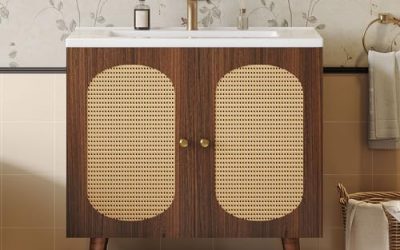
The LEYAOYAO set is the curved-and-fluted statement of the three. Each table stands about twenty-four inches tall, twenty-three inches wide and fifteen and a half inches deep, generous bedside proportions that suit a queen or king bed. The design combines the two strongest current looks in one piece: fluted waveform drawer fronts across two drawers, wrapped in a curved profile with smooth rounded edges, so the silhouette has no sharp corner anywhere. A woodgrain top warms the brown finish, and the pair presents as soft modern rather than stark. There is a built-in charging station, which this guide treats as a practical concession rather than a design feature; the cables it saves you from draping across the top do, in fairness, keep the look cleaner. If your bedroom leans Scandinavian or soft contemporary, this is the pick that photographs the way the listing promises.
Wodeer Fluted Nightstands, Set of 2, White (ASIN: B0FP51P521)
The Wodeer pair takes the same fluted-front language and runs it in the opposite direction: smaller, brighter, and unapologetically modern. Each table is roughly fifteen and a half inches wide, thirteen and a half inches deep and twenty-three and a half inches tall, a compact footprint for smaller bedrooms and guest rooms. Two drawers per table carry the fluting, and the white finish throws the groove shadows harder than a wood tone does, which is the point. This variant adds an app-controlled light strip and a pair each of mains and USB sockets per table; the light is best treated as an occasional accent rather than a nightly feature, but as a design object the set earns its place on fluted fronts and tidy proportions alone. In a white or pale-grey scheme it disappears elegantly; against dark walls it becomes the deliberate bright note at each side of the bed.
Nathan James Harper Nightstand, Set of 2, Oak Brown (ASIN: B0BDS9ZNFH)
The Harper is the mid-century answer, and the warmest-looking piece here. Two easy-glide drawers sit in an oak-laminated frame on tapered pinewood legs, with floor protector pads under the feet and a tabletop rated to twenty-five pounds, enough for a lamp, a book stack and a water carafe without anxiety. The model reference is 32704-2. Where the fluted sets chase current taste, the Harper bets on the look that has been continuously in production, in one form or another, for decades: warm wood, clean lines, legs that lift the body off the floor so the whole piece reads light. It suits rooms with other wood furniture better than either fluted set, and it is the safest of the three for a room you do not plan to redecorate around. One buying note: records for this set have at times shown a temporarily empty featured buying block, so confirm the oak brown finish is orderable on the listing when you check; if it is not, the fluted sets above are the standing alternatives.
How the three looks age
A nightstand is bought for years, so it is worth asking how each design language here will read in five of them. Warm mid-century wood, the Harper’s bet, has the longest track record: it survived its own revival and settled into the permanent furniture vocabulary, and an oak tone works with both the pale bedrooms of the last decade and the darker, moodier schemes replacing them. Fluted fronts are the current favourite, and the risk is real that heavy fluting everywhere will date the way heavy distressing did; the safer expression is the one both fluted picks here use, grooves on drawer fronts only, with the body kept plain, so the texture reads as craft rather than costume. Curved profiles, the LEYAOYAO set’s softening move, age the best of the trend-driven choices, because rounded edges belong to no single decade and they are kinder to hips and shins in a dark room at three in the morning.
White finishes deserve a separate word. The Wodeer pair’s bright gloss-adjacent white is the boldest choice here and the least forgiving of a room that changes around it; it commits you to a light scheme. Brown and oak finishes absorb a change of bedding, wall colour or lamp style without complaint. If the room is finished and staying, white is a design decision; if the room is still evolving, wood tones are the flexible ones.
What dates or cheapens a nightstand
The giveaways are consistent across the market. Printed wood grain that repeats visibly across a drawer front reads as a photograph of wood, because it is one. Handles that are moulded to imitate metal, rather than being metal, cheapen a front at first touch. A back panel left as raw, unfinished board is normal at this end of the market and invisible in place, but unfinished drawer interiors that snag fabric are a daily irritation worth checking in the listing’s construction notes. Finally, scale: an undersized nightstand beside a large bed looks lost no matter how fine its detailing, which is why the sizing rules below come before any question of style.
Sizing and pairing rules
Measure your mattress top before anything else, and aim for a nightstand top within about two inches below it to level with it. Leave the width proportionate to the bed: compact tables like the Wodeer pair suit full and queen beds in small rooms, while the wider LEYAOYAO set holds its own beside a king. Buy the pair in one order so finishes match exactly, keep lamps as a matched pair too, and let the nightstands be the second-strongest visual element in the room after the bed itself; when the bedside tables out-shout the bed, the room stops resting.
Styling the top surface
A good-looking nightstand can be undone by what lands on it, and the rules are simpler than the styling photographs suggest. Start with the lamp: its shade should sit roughly at shoulder height when you are propped up in bed, and its footprint should take no more than a third of the top surface, which is a real constraint on the compact Wodeer pair and a reason the wider LEYAOYAO set suits lamp-heavy readers. Keep the permanent population of the top to three things at most: the lamp, the current book, and one personal object. Everything else belongs in the drawers all three picks provide, because a clear top is what lets a fluted front or a warm oak grain be seen at all. A small tray under the water glass and spectacles keeps the daily objects looking placed rather than scattered, and matching the tray’s tone to the nightstand’s hardware or legs ties the arrangement together. Leave some empty surface on purpose. Negative space is what separates a styled bedside from a storage surface, and it costs nothing.
Height layering finishes the job. The lamp gives the tall note, a short stack of two or three books the middle, and the tray the low line; that stepped profile is the same composition whether the nightstand is fluted, curved or mid-century, and it is why these three designs photograph well with almost any bedding. Change the book spines and the personal object with the seasons and the room feels redecorated without a single new piece of furniture.
Frequently asked questions
Should nightstands match the bed frame exactly?
No. Matching the wood tone family is enough, and a deliberate contrast, such as white fluted tables against a wood bed, often looks more designed than a matched suite.
Are fluted fronts a passing fashion?
Fluting is having a strong moment, but grooved and reeded fronts appear in furniture across several earlier decades too. The curved profiles on the LEYAOYAO set soften the look further, which ages more gracefully than sharp trend pieces.
How much storage does a nightstand really need?
One drawer for the untidy small things and a surface for lamp, book and water covers most sleepers. The second drawer on all three picks here is what keeps the top, and therefore the look, clear. Chargers, hand cream, spare spectacles and the remote all disappear into it, which is precisely why the visible surface stays composed.
Do the powered features on two of these sets matter?
They are conveniences, not design. Both sets were chosen for their fronts and proportions; buy them for the look and treat the sockets and lighting as a bonus that also reduces cable clutter.
Disclosure: As an Amazon Associate, this site may earn from qualifying purchases made through links in this article, at no additional cost to you.