Our Short List of 3
All 3 Picks at a Glance
| Product | Specs | Action |
|---|---|---|
 InSinkErator Evolution Cover Control | Check price on Amazon | |
 Moen GXB75C Host Series | Check price on Amazon | |
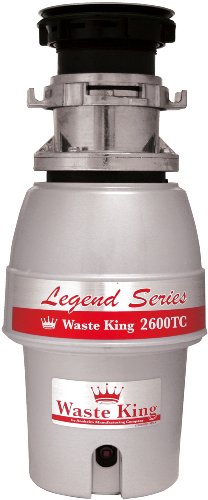 Waste King L-2600TC Legend Series | Check price on Amazon |
Key takeaways
- Find the best batch feed garbage disposals for safer kitchens: cover-control activation, no wall switch, quiet motors, and batch-only grinding compared.
A garbage disposal is one of those appliances nobody thinks about until it becomes a problem. A unit that jams on celery strings, roars loud enough to wake a sleeping child, or sits behind an open drain with a wall switch a curious toddler can reach is a daily annoyance at best and a genuine safety worry at worst. That is exactly the problem the best batch feed garbage disposals are built to solve, and it is why this smaller, quieter corner of the disposal market has such loyal buyers.
Batch feed disposals work differently from the far more common continuous feed type. Instead of flipping a wall switch while the drain sits open, you load food scraps into the chamber, set the stopper or cover in place, and twist it. The motor only runs while that cover is engaged. Pull the cover out and the machine stops, immediately and without exception. Nothing can fall into a spinning chamber while the drain is open, because the chamber cannot spin while the drain is open.
This guide covers what batch feed means in practice, how to choose a unit that fits your sink and your household, and three batch feed disposals that are genuinely sold as batch feed models on Amazon US: the InSinkErator Evolution Cover Control, the Moen GXB75C, and the Waste King L-2600TC. Every product below is a true batch feed unit, confirmed against the manufacturer’s own specification sheets, not a continuous feed model with a stopper sold separately.
At a Glance
| Product | Best for | Key spec |
|---|---|---|
| InSinkErator Evolution Cover Control | Quietest grinding and finest grind | 3/4 HP, 3-stage MultiGrind, SoundSeal |
| Moen GXB75C Host Series | Plug-and-play install with cord included | 3/4 HP Vortex motor, 2,700 RPM, cord included |
| Waste King L-2600TC | Small cabinets and lighter budgets | 1/2 HP, 2,600 RPM, 36-inch cord included |
How to Choose a Batch Feed Garbage Disposal
Batch feed is a small category, and the differences between models matter more than the similarities. Work through the factors below before you buy, and measure your cabinet first. A batch feed unit that does not fit under your sink is a return, not a disposal.
Confirm the feed type, not just the marketing. This is the single most important check in this category. Several roundups and retailer listings describe continuous feed disposals as batch feed models, or suggest that adding a cover-control stopper to a continuous feed unit turns it into a batch feed unit. It does not. A true batch feed disposal has its activation built into the cover or stopper mechanism, so the motor circuit is completed by the cover itself. Check the manufacturer’s specification sheet for the words batch feed, and check whether the feed type is listed as batch or continuous. All three models in this guide are documented as batch feed by their manufacturers.
Match horsepower to your household. Horsepower decides what a disposal can grind without stalling and how much food it can handle in one load. A 1/2 HP motor suits a one- or two-person household that mostly disposes of soft scraps, vegetable peels, and small amounts of leftovers. A 3/4 HP motor is the sweet spot for most family kitchens: it handles fibrous scraps like celery and potato peels, small bones, and coffee grounds with fewer stalls. There are almost no 1 HP batch feed disposals for residential kitchens, because batch feed is a safety-first design and the category tops out at 3/4 HP for most homes.
Understand the motor type. Most batch feed disposals use one of two motor designs. InSinkErator’s Dura-Drive induction motors run at 1,725 RPM and are known for strong starting torque, which matters when a loaded chamber starts from a standstill. Moen’s Vortex permanent magnet motors run faster, at 2,700 RPM, and are marketed for jam resistance. Waste King’s permanent magnet motor runs at 2,600 RPM. Neither design is categorically better; induction motors tend to run quieter and steadier under load, while high-speed permanent magnet motors tend to grind quickly and cost less.
Count the grind stages. A single-stage grinder uses one grind ring and plate, which is adequate for soft waste but leaves coarser particles that can contribute to clogs. A two-stage system grinds waste twice, producing finer particles. A three-stage system, like the MultiGrind setup in the InSinkErator Evolution Cover Control, grinds finer still, which is especially useful in a batch feed unit because the whole load is ground in one continuous cycle rather than fed in gradually. Finer grind also matters for septic systems, where smaller particles break down more readily.
Measure height and width before ordering. Batch feed disposals are taller than continuous feed units of the same power, because the cover-control mechanism adds height above the grind chamber. The models in this guide range from roughly 12 inches to nearly 16 inches tall, and a tall unit in a shallow cabinet can mean moving the drain trap or shortening the drain pipe. Measure the vertical drop from the sink flange to the cabinet floor, and check the drain outlet position, since a disposal whose outlet sits too high or too low relative to the wall drain will not connect cleanly.
Decide how it will be powered. Some batch feed disposals ship with a pre-installed power cord and plug into a GFCI-protected outlet under the sink, which makes installation a straightforward plug-in job with no electrician and no wall switch. Others ship ready for hardwiring and require a separate cord or hardwire kit. If you are replacing an existing hardwired disposal, a hardwire-ready unit is fine. If you are installing in a rental or an older kitchen without a switched outlet under the sink, a corded model is the simpler choice.
Weigh noise insulation and warranty together. Disposals are loud by nature, but insulation makes a real difference in open-plan kitchens and homes with light sleepers. Look for named insulation systems such as SoundSeal or SoundSHIELD, and for fully insulated sound shells. Warranty length is a useful proxy for how much confidence the manufacturer has in the motor and seals: the models here carry warranties from five years to nine years, and the longer warranties generally cover in-home service rather than return-to-factory repair.
Product Reviews
InSinkErator Evolution Cover Control
The InSinkErator Evolution Cover Control is the premium pick in this category, and the reasons are all on the specification sheet. It runs a 3/4 HP Dura-Drive induction motor at 1,725 RPM, uses a three-stage MultiGrind system with stainless steel grind components, and wraps the whole thing in SoundSeal insulation. It is the only model in this guide with three grind stages, and that finer grind is the feature that matters most for a batch feed unit, where the entire load is ground in a single cycle and there is no second chance to feed a stubborn scrap through again.
Activation is by magnetic CoverStart: the cover goes in, the motor runs; the cover comes out, the motor stops. There is no wall switch, which makes it a strong choice for households with small children and for kitchens where adding a switch would mean cutting into tile or plaster. The unit is assembled in the USA and carries a 9-year limited in-home warranty, the longest coverage among the three models reviewed here.
Pros:
– Three-stage MultiGrind produces the finest grind in this guide
– Magnetic CoverStart means the unit cannot run with the drain open
– SoundSeal insulation keeps operation noticeably quieter than standard disposals
– Stainless steel grind components resist corrosion
– 9-year limited in-home warranty
Cons:
– Power cord sold separately; corded installation needs an accessory kit
– Tall body at nearly 15 inches may not fit shallow cabinets
– Premium positioning among batch feed models
Moen GXB75C Host Series
The Moen GXB75C is the most owner-reviewed batch feed disposal in this category, and the reason is straightforward: it is the easiest one to install. It ships with a pre-installed power cord, a batch feed stopper, a stainless steel sink flange, a drain elbow, and a universal mounting assembly that fits most existing 3-bolt mounts. For a replacement install, that combination often means plugging in and bolting on, with no electrician and no wall switch.
The motor is a 3/4 HP Vortex permanent magnet design running at 2,700 RPM, built for jam resistance rather than raw torque. It handles coffee grounds, produce scraps, and small bones, and owners frequently single out the SoundSHIELD insulation, describing the unit as quiet enough to run while a child sleeps nearby. The grind chamber holds about 22 ounces, which is enough for a normal post-meal load but smaller than the large chambers on some InSinkErator pro models, so very large loads are better split into two batches.
There are two things to know before buying. First, the unit is tall at 15.63 inches high and 7.5 inches wide, and it weighs 11 pounds, so measure your cabinet and be ready to adjust the drain pipe if the trap sits high. Second, the grind components are galvanized steel rather than stainless steel, which is the standard trade-off at this level of the market: the unit costs less than the stainless-component InSinkErator models, but stainless steel holds up better over many years of wet use. It carries an 8-year limited warranty and is rated safe for use with properly sized septic systems.
Pros:
– Pre-installed power cord for plug-and-play installation
– Batch feed stopper included; no wall switch required
– 3/4 HP Vortex motor at 2,700 RPM with jam-resistant design
– SoundSHIELD insulation for quieter operation
– Universal 3-bolt mount fits most existing assemblies
– 8-year limited warranty
Cons:
– Tall at over 15.5 inches, so some plumbing may need adjusting
– Galvanized steel grind components rather than stainless steel
– Smaller grind chamber than large-capacity pro models
Waste King L-2600TC Legend Series
The Waste King L-2600TC is the compact and budget-friendly option in this guide, and it earns its place by being the only 1/2 HP batch feed model here that still fits comfortably in a cramped cabinet. It runs a 1/2 HP permanent magnet motor at 2,600 RPM, uses a three-position stopper for controlled activation, and includes a 36-inch power cord, so it needs no wall switch. The EZ Mount system and removable splash guard keep installation and cleaning simple.
The manufacturer’s own specification sheet documents the feed type as batch loading with no wall switch, and the controlled-activation stopper is the defining feature: you set the stopper to the grind position to run the unit, and removing it stops the motor. It weighs about 11 pounds, carries a 5-year in-home warranty, and is a good match for smaller households, apartments, and secondary sinks where a full-size 3/4 HP unit would be more than the kitchen needs.
The limitation is power. A 1/2 HP motor at 2,600 RPM handles everyday soft scraps, vegetable peels, and small leftovers well, but it is not the right tool for frequent large loads, fibrous scraps like artichoke leaves and corn husks, or bones. Overloading it leads to stalls, and it has a single-stage grind system rather than the multi-stage systems on the 3/4 HP models, so particles come out coarser and the unit benefits from running cold water for a few seconds after the grind finishes to flush the drain line.
Pros:
– True batch feed with a three-position stopper; no wall switch needed
– 36-inch power cord included
– Compact body fits small cabinets that taller units cannot
– EZ Mount system for straightforward installation
– Removable splash guard for easy cleaning
– 5-year in-home warranty
Cons:
– 1/2 HP motor is underpowered for large or fibrous loads
– Single-stage grinding leaves coarser particles than multi-stage models
– Smaller capacity suits small households better than large families
Comparison: Which Batch Feed Disposal Fits You
All three models share the defining batch feed trait: the motor only runs with the cover or stopper engaged, so none of them can spin with the drain open. The choice comes down to power, grind quality, installation, and fit.
Choose the InSinkErator Evolution Cover Control if quiet operation and grind quality matter most. Its three-stage MultiGrind system and SoundSeal insulation are the best in this guide, and its 9-year warranty reflects that positioning. Budget for the cord accessory if you need a plug-in install, and measure your cabinet, because it is tall.
Choose the Moen GXB75C if you want the simplest installation. The pre-installed cord, included stopper, and universal 3-bolt mount make it the easiest replacement in this guide, and its 2,700 RPM Vortex motor handles everyday family loads well. It is the best all-rounder for a household that wants batch feed safety without a project.
Choose the Waste King L-2600TC if your cabinet is small, your household is small, or your budget is tight. It is the only model here that fits comfortably where taller units cannot, and its 1/2 HP motor is enough for light daily use. Just respect its limits: load modest batches, avoid fibrous waste and bones, and run cold water after each cycle.
One more practical note applies to all three. Batch feed changes the kitchen habit, and the first week is the adjustment period. You will reach for a wall switch that is not there, load the chamber, and wonder why nothing happens. The answer is always the same: insert the stopper and twist. Teach everyone in the household that the twist is the switch, and the safety benefit of the design becomes second nature within days.
Frequently Asked Questions
What is the difference between a batch feed and a continuous feed garbage disposal?
A batch feed disposal only runs when its cover or stopper is engaged in the drain, so you load the chamber, insert the cover, and the motor grinds that one batch. A continuous feed disposal runs from a wall switch with the drain open, so you can keep feeding scraps in while it runs. Batch feed is safer because the motor cannot run with the drain exposed; continuous feed is more convenient for large, ongoing loads.
Are batch feed garbage disposals actually safer for kids?
Yes, for the specific hazard they address. A child cannot switch on a batch feed disposal by flipping a wall switch, because there is no wall switch and the motor cannot run without the cover in place. That removes the most common accident scenario. It does not make the drain itself safe: with the cover off, the drain is still an open hole, and the disposal should never be reached into while it is plugged in.
Can a batch feed disposal be installed without a wall switch?
Yes. That is one of the main reasons people choose them. Batch feed disposals are activated by the cover or stopper, so no wall switch is needed. Corded models plug into a GFCI-protected outlet under the sink, while hardwire models connect directly to the household wiring. Rentals and older kitchens often benefit most, since no new electrical work is required.
Should I get a 1/2 HP or 3/4 HP batch feed disposal?
Choose 1/2 HP for a one- or two-person household with light, mostly soft food waste. Choose 3/4 HP for a family kitchen, for fibrous scraps like celery and potato peels, and for anyone who grinds small bones or coffee grounds regularly. There is almost no residential batch feed market above 3/4 HP, so 3/4 HP is effectively the top of the category.
Do batch feed disposals use less water?
Generally, yes. A continuous feed unit has the tap running for as long as you keep feeding it, while a batch feed unit only needs water for the duration of one batch. Either way, always run cold water during grinding and for a few seconds after, to carry ground waste through the drain line.
What should not go into a batch feed disposal?
Do not grind grease or oil, coffee filters, pasta and rice in large quantities, fibrous materials like corn husks and artichoke leaves, bones larger than small poultry bones, or anything non-food such as glass, metal, or plastic. Batch feed units are especially sensitive to overloading, so load modest batches and let each one finish before adding more.
Conclusion
The best batch feed garbage disposals trade a little convenience for a real safety gain: a motor that cannot run with the drain open. The InSinkErator Evolution Cover Control leads on grind quality and quiet operation, the Moen GXB75C leads on easy plug-in installation, and the Waste King L-2600TC leads on compact size and value. All three are genuine batch feed models, confirmed against manufacturer specification sheets, and all three install without a wall switch.
Before you order, confirm the feed type on the manufacturer’s spec sheet, measure the height available under your sink, and check whether a power cord is included. Get those three things right and the rest of the decision is simple: match the horsepower to your household, pick the quietest unit your cabinet can fit, and let the cover do the switching.
Disclosure: As an Amazon Associate, we earn from qualifying purchases.