Key takeaways
- Looking for the best small cell phone chargers? Compare pocket-size power banks and tiny wall chargers that keep your phone going without weighing you down.
A dead phone at the wrong moment is a familiar frustration. You are navigating an unfamiliar city, waiting on an important call, or trying to board a flight, and the battery icon turns red. A full-size power bank solves the problem, but it also adds bulk to a pocket or bag that is already full. That is where the best small cell phone chargers earn their place. These are compact power banks and tiny wall adapters designed to disappear into a jacket pocket, a purse, or a carry-on, while still delivering enough charge to get a phone through the rest of the day. Whether you travel light, commute by train, or simply hate carrying a bag full of cables, a charger that fits in a pocket changes how often your phone actually gets topped up.


Small does not have to mean weak. Modern compact chargers use efficient USB-C Power Delivery, gallium nitride components, and dense battery cells to pack serious capability into a body not much bigger than a lipstick tube or a matchbox. The trade-off is capacity: a pocket-size charger will top up a phone once or twice, not three or four times, and a single-port wall charger can only feed one device at a time.
This guide compares four compact options that cover the main ways people charge on the go: a fast pocket power bank, an ultra-light pocket bank, a miniature wall charger, and a keychain charger. Each one is small enough to carry every day, and each one serves a slightly different kind of user. Use the quick picks table to find your match, then read the full breakdowns and the buying guide before deciding.
As an Amazon Associate, we earn from qualifying purchases.
Quick Picks
Our Short List of 3
All 4 Picks at a Glance
| Product | Specs | Action |
|---|---|---|
| 1. INIU P41 10,000mAh 45W — Best Overall | Check price on Amazon | |
| 2. Anker Nano Portable Charger 22.5W 5,000mAh — Best Pocket Power Bank | Check price on Amazon | |
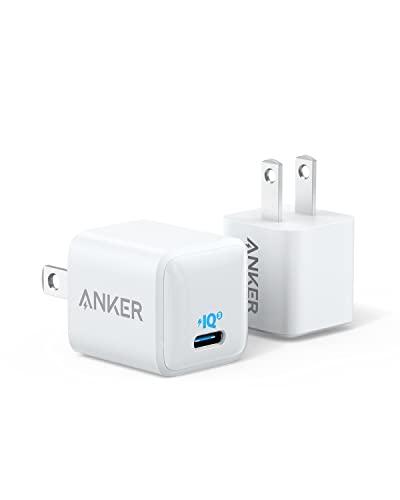 3. Anker PowerPort III Nano 20W — Best Wall Charger | Check price on Amazon | |
 4. RORRY CharmGo 5,000mAh — Best Keychain Charger | Check price on Amazon |
1. INIU P41 10,000mAh 45W — Best Overall
The INIU P41 is the pick for anyone who wants a small charger that does not feel like a compromise. It packs a 10,000mAh battery and a 45W USB-C Power Delivery output into a body the maker describes as roughly 40 percent smaller than comparable 10,000mAh banks. That combination is unusual: most pocket-size banks top out at 15W or 22.5W, while the P41 can fast-charge a modern phone and still have capacity left for a second device or a second top-up later in the day.
A built-in USB-C cable is the feature that makes the P41 genuinely pocket-friendly. The cable tucks into the body and doubles as a carrying loop, so there is no separate cord to forget or untangle. The bank also has a USB-C port and a USB-A port, which means it can charge two devices at once when needed.
The 10,000mAh capacity is the sweet spot for daily carry. It is enough to recharge most current smartphones at least once with charge to spare. The 45W output also makes it useful beyond phones: it can feed a tablet or a pair of wireless earbuds at full speed, and it recharges itself faster than lower-wattage banks.
There are a few things to keep in mind. The P41 is sold in several closely related variants, including earlier 15W versions and a detachable-cable edition, so it is worth confirming the listing shows the 45W model with the built-in USB-C cable before ordering. The bank is also larger and heavier than the 5,000mAh options in this guide, so if absolute minimum size matters more than capacity, one of the smaller picks below will suit you better. For most people, though, the P41 is the best balance of size, speed, and capacity in this roundup.
Key specs: 10,000mAh capacity; 45W USB-C Power Delivery output; built-in USB-C cable; USB-C and USB-A ports; LED battery indicator; 3-year manufacturer warranty.
2. Anker Nano Portable Charger 22.5W 5,000mAh — Best Pocket Power Bank
If the INIU P41 is the do-everything pick, the Anker Nano Portable Charger is the minimalist one. It holds 5,000mAh in a body that measures about 3 inches by 1.5 inches by 1 inch and weighs 102 grams, according to Consumer Reports measurements. That is roughly the size of a small candy bar, and it fits in a jeans coin pocket or the smallest compartment of a purse without a second thought.
Despite its size, the Nano is not a one-trick device. It has two USB-C ports and can charge two devices at the same time, with a combined output of 22.5W. That is enough to fast-charge a phone while topping up a pair of earbuds, or to share a charge with a travel companion. The 5,000mAh capacity will refill most modern smartphones to roughly three-quarters or more from empty, which is usually enough to get through an evening out, a long commute, or a delayed flight.
Anker is one of the most established names in portable charging, and the Nano carries the brand’s usual safety features, including temperature control and overcharge protection. The compact rectangular shape is easy to hold while the phone charges, and the bank recharges through either USB-C port.
The main limitation is capacity. A 5,000mAh bank holds about one phone charge, so it is an emergency top-up device rather than a multi-day travel companion. It also has no built-in cable, so a short USB-C cable needs to come along, and there is no wireless charging pad. If your days regularly run long and you want more than one full recharge, step up to the 10,000mAh INIU P41 instead. If you want the smallest capable bank from a major brand, this is the one to get.
Check the Anker Nano Portable Charger on Amazon
Key specs: 5,000mAh capacity; 22.5W output; two USB-C ports; charges two devices simultaneously; about 3 x 1.5 x 1 inches; 102 grams.
3. Anker PowerPort III Nano 20W — Best Wall Charger
Not every small charger needs a battery inside. If you spend most of your time near an outlet — at a desk, in a hotel room, or at an airport gate — a miniature wall charger is the lightest option of all, because there is no battery to carry. The Anker PowerPort III Nano is one of the smallest 20W wall chargers available, measuring about 1.18 by 1.08 by 1.08 inches and weighing around 30 grams in its US version. It is roughly the same size as the old 5W charger that used to ship in iPhone boxes, yet it delivers four times the power.
The single USB-C port supports USB Power Delivery 3.0 and Anker’s PowerIQ 3.0 technology, which negotiates the fastest safe charging speed for the connected device. For most modern phones, that means reaching about half charge in around 30 minutes. The charger accepts a wide 100 to 240 volt input, so it works with outlets around the world with only a plug adapter, and it can also charge a tablet at a useful speed when a phone is not plugged in.
Build quality is a strong point. The Nano carries safety certifications and includes surge protection and temperature monitoring, which matter in a device that sits in a wall socket for hours at a time. Its small footprint also means it does not block the neighboring outlet on a power strip.
The obvious limitation is the single port: it charges one device at a time, and it needs an outlet, so it cannot help on a hike or a long bus ride. It also ships without a cable, so a USB-C cable is a separate purchase if you do not already own one. For a desk drawer, a travel kit, or a bedside table, though, it is hard to beat.
Check the Anker PowerPort III Nano on Amazon
Key specs: 20W USB-C Power Delivery output; single USB-C port; PowerIQ 3.0; about 1.18 x 1.08 x 1.08 inches; around 30 grams; 100-240V input; 18-month warranty; cable not included.
4. RORRY CharmGo 5,000mAh — Best Keychain Charger
The RORRY CharmGo takes a different approach to small: instead of shrinking a standard power bank, it turns the charger into something you clip to your keys. A built-in keychain loop lets it hang from a bag strap or a key ring, so it is always with you and never left behind on a nightstand. That alone solves the most common portable charger problem, which is simply forgetting to bring it.
Inside the keychain body is a 5,000mAh battery with built-in cables, so no separate cord is needed. The listing describes it as a 3-in-1 charger that can power a phone, a smartwatch, and wireless earbuds at the same time, with built-in connectors covering the main device types. The maker states the capacity is enough to recharge a current-generation iPhone about once, and to recharge wireless earbuds several times over, which matches what a 5,000mAh cell can realistically deliver.
The CharmGo comes in a range of colors, which is a small thing but a real one for a device that hangs visibly from a bag. It is aimed squarely at Apple device owners — the listing highlights compatibility with recent iPhones, Apple Watch models, and AirPods — although the built-in USB-C cable also covers many Android phones.
A keychain charger is a specialist tool. The 5,000mAh capacity is an emergency reserve, not a multi-charge workhorse, and the built-in cables are fixed, so the charger cannot adapt the way a bank with standard ports can. Because the CharmGo is sold in many color variants under closely related listings, confirm the listing shows the 5,000mAh keychain model with built-in cables before ordering.
Check the RORRY CharmGo on Amazon
Key specs: 5,000mAh capacity; built-in cables; keychain loop design; charges phone, watch, and earbuds simultaneously per the listing; multiple color options.
Buying Guide: How to Choose a Small Cell Phone Charger
Small chargers come in two basic kinds, and the right one depends on how you spend your day. A power bank carries its own battery and works anywhere, which makes it the right choice for travel, commuting, and long days away from outlets. A wall charger is smaller and lighter because it has no battery, but it only works when an outlet is nearby. Before choosing, think about which situation you face most often.
Capacity is the first number to look at on a power bank, and it is measured in milliamp-hours, written as mAh. A 5,000mAh bank holds roughly one full phone charge, which is enough for an evening out or a long commute. A 10,000mAh bank holds roughly two charges and is a better fit for full-day trips, travel days, or anyone who also charges earbuds or a watch. For everyday carry, 5,000 to 10,000mAh is the useful range.
Output wattage decides how fast the phone actually charges. A 5W charger will refill a phone, but slowly. A 20W USB-C Power Delivery output is the practical minimum for fast charging on most modern phones, and it can take a phone from empty to about half charge in roughly 30 minutes. Banks rated at 22.5W or 45W charge faster still and can also handle tablets. Check that the wattage figure refers to the output that reaches your phone.
Ports and cables decide how convenient the charger is in daily use. A built-in cable is the single most useful feature on a small power bank, because it removes the one accessory that is easiest to forget. USB-C is now the standard connector for most new phones, while older iPhones use Lightning and some Apple devices use a magnetic connection. If you carry more than one kind of device, look for a bank with both USB-C and USB-A ports, or with multiple built-in cables.
Size and weight are the whole point of a small charger, so compare them honestly. A bank that measures 3 inches long and weighs around 100 grams will disappear into a pocket. A 10,000mAh bank will be larger and heavier, but still far smaller than the brick-size banks of a few years ago. Wall chargers are measured in inches and grams too: the smallest 20W adapters weigh about 30 grams and barely protrude from the socket. If a charger is too big to carry every day, it will stay at home, and a charger left at home charges nothing.
Safety matters more with chargers than with most accessories, because a cheap or uncertified charger can damage a phone battery or overheat. Look for recognized brands and for safety features such as overcharge protection, short-circuit protection, and temperature control. Certifications from testing labs are a good sign. Avoid unbranded listings with vague specifications.
Finally, check compatibility before ordering. Confirm the connector type matches your phone, confirm the output wattage suits your phone’s fast-charging standard, and confirm any magnetic or wireless feature matches your phone model. A charger that is perfect for one phone can be the wrong choice for another, and the return process is an annoyance that a minute of checking avoids.
Frequently Asked Questions
What counts as a small cell phone charger?
A small cell phone charger is a compact power bank or wall adapter designed for everyday carry. Power banks in this class usually hold 5,000 to 10,000mAh and measure around 3 to 4 inches long, while wall chargers deliver 20W from a body about an inch on each side.
Is 5,000mAh enough for a phone?
For most people, yes, as an emergency reserve. A 5,000mAh bank will recharge most current smartphones roughly once, or to about three-quarters from empty, which is enough to get through an evening, a commute, or a delayed flight. If you regularly need more than one full recharge in a day, or you also charge earbuds and a watch, a 10,000mAh bank is a better fit.
Should I buy a wall charger or a power bank?
It depends on where you charge. A wall charger is smaller, lighter, and cheaper, and it is the best choice if you are usually near an outlet at a desk, in a hotel, or at home. A power bank works anywhere, including on a plane, on a hike, or in a car, and it is the better choice for travel and long days out. Many people keep a small wall charger at home and a pocket power bank in their bag.
Do small chargers support fast charging?
Many do. Look for USB-C Power Delivery, often written as USB-C PD, with an output of at least 20W for phones. Banks in this guide range from 20W to 45W, and all of them can fast-charge a compatible phone. Keep in mind that the phone itself sets the limit: a phone that accepts 20W will not charge faster from a 45W bank, but the extra wattage is useful for tablets and for recharging the bank itself.
Can I take a small power bank on a plane?
In most cases, yes, in carry-on luggage. Aviation rules generally allow lithium-ion power banks rated under 100 watt-hours in the cabin, and a 10,000mAh bank is well under that limit. Power banks must go in carry-on bags, not checked luggage, and some airlines ask that they be switched off or protected from short circuits. Check your airline’s rules before flying, since limits and procedures can vary.
Conclusion
The best small cell phone charger is the one you actually carry, and that means size matters as much as speed. For most people, the INIU P41 10,000mAh 45W is the strongest all-round choice: it is genuinely pocket-size, it charges fast, and its built-in cable means there is nothing extra to remember. If you want the smallest bank possible from a major brand, the Anker Nano Portable Charger 22.5W is hard to beat at around 100 grams with two USB-C ports. If you charge mostly near an outlet, the Anker PowerPort III Nano 20W wall charger is the lightest option in this guide, barely larger than the old 5W brick it replaces. And if your charger keeps getting left behind, the RORRY CharmGo solves the problem by clipping to your keys.
Whichever you choose, match the capacity to your day, confirm the connector fits your phone, and buy from a listing that clearly shows the model and specifications you expect.