Key takeaways
- The best small unlocked CDMA Android phones, compared: compact Verizon-compatible Android phones with sizes, cameras, battery life and carrier checks.
Introduction
Finding the best small unlocked CDMA Android phones means searching a corner of the phone market that has almost closed. Most Android phones sold today are large slabs built for GSM and LTE networks, and the CDMA networks that once defined Verizon and Sprint service have been retired. The phones below are the compact exceptions: small Android handsets built for CDMA-era carrier compatibility and sold unlocked.
This guide suits three kinds of buyers: anyone who wants a genuinely pocketable Android phone; anyone on a Verizon-network plan who needs the right bands; and anyone shopping for a second phone or a minimalist daily driver.
Three phones follow, each checked against Amazon US listings and independent sources: the credit-card-sized Palm Phone, the budget-friendly Motorola Moto G6, and the camera-first Google Pixel 3a. All three are unlocked Android phones carrying CDMA support in their specifications. Read the carrier section first: it decides whether any of them will work for you.
A note on CDMA before you buy: Verizon shut down its CDMA network at the end of 2022, and Sprint no longer exists as a separate carrier. A phone described as CDMA-compatible today is built for that era and connects through LTE bands, not a live CDMA network. Confirm compatibility with your carrier, ideally by checking the IMEI, before ordering.
At a Glance
| Phone | Best for | Key spec |
|---|---|---|
| Palm Phone PVG100 | Smallest size and minimalist use | 3.3-inch display, 32GB storage |
| Motorola Moto G6 | Everyday use on a modest budget | 5.7-inch Full HD+ display, dual rear cameras |
| Google Pixel 3a | Best camera in a compact body | 5.6-inch OLED display, 12.2MP rear camera |
How to Choose
Carrier compatibility comes first. CDMA as a live network is gone in the United States, so the practical question is whether the phone supports the LTE bands your carrier uses today and whether the carrier will activate it. All three models below were built with Verizon in mind. Even so, activation is not automatic: carriers keep lists of approved devices, and an older unlocked phone can be refused even when its bands match. Before ordering, check the IMEI with your carrier and confirm the exact model number is accepted. A listing that says unlocked does not guarantee activation.
Size is relative, and honest sizing matters. A genuinely small phone here is the Palm, at 3.3 inches, roughly the size of a credit card. The other two measure 5.6 and 5.7 inches, which sounds large until compared with current phones that commonly exceed 6.5 inches. Narrow bodies and tall 18:9 screens keep both usable in one hand. Decide which kind of small you want: a true miniature, or a compact mainstream phone.
Software age is the real trade-off. Every phone here launched several years ago, and none receives current Android updates any longer. The Pixel 3a launched on Android 9, the Moto G6 on Android 8.0 with an update path to Android 9, and the Palm on Android 8.1. That means older security patches and, in some cases, apps that will no longer install. For calls, messaging, maps, music and photography, that is usually acceptable. For banking apps and anything demanding the newest security standards, check the app requirements before committing.
Battery condition deserves attention. Many listings today are renewed or used rather than brand new, and a battery that has been in storage or service for years will not hold a charge the way a fresh one does. The Palm has a particularly small 800mAh cell because of its size, so it needs charging more often by design. The Moto G6 and Pixel 3a carry 3,000mAh cells, which suit a full day of light use. When buying renewed, read the listing condition carefully and confirm the return policy.
Storage, cameras and extras round out the choice. The Palm offers 32GB and the Pixel 3a 64GB, both with no memory card slot, so what you buy is what you get. The Moto G6 accepts a microSD card up to 128GB, which is useful for photos and offline media. Camera priorities differ too: the Pixel 3a leads by a clear margin, the Moto G6 adds a depth sensor for portraits, and the Palm keeps a single capable rear camera. Extras such as a headphone jack, fingerprint reader and water resistance vary across the three, so weigh them against size and carrier factors.
The Phones
Palm Phone PVG100
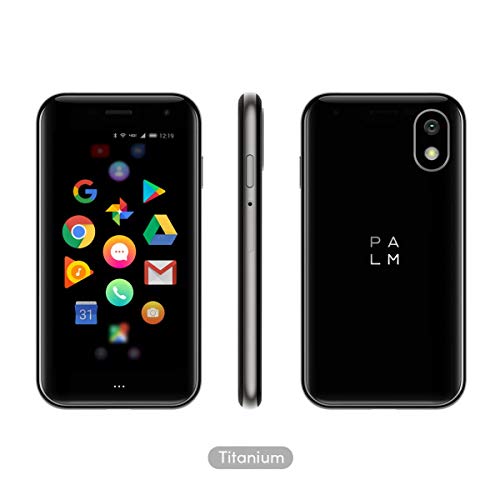
The Palm Phone PVG100 is the smallest phone in this guide by a wide margin, and the only one that can honestly be called tiny. Its 3.3-inch HD display packs 445 pixels per inch, so text stays sharp despite the miniature screen, and the whole handset is roughly the size of a credit card. Palm built it as a minimalist second phone and a digital-life companion, and that purpose shapes everything about it: it runs full Android, so familiar apps work, but the small screen and small battery push toward shorter sessions and lighter use.
Inside, a Qualcomm Snapdragon 435 octa-core processor pairs with 3GB of RAM and 32GB of storage. That is modest hardware, suited to calls, messaging, maps, music and light browsing rather than heavy games. The rear camera is 12 megapixels with a flash, and the front camera is 8 megapixels. Palm’s own specifications list an 800mAh battery, which is small in absolute terms and means regular charging, especially on days with heavy use. The body carries IP68 water resistance, which is unusual for a phone this size, and a feature called Life Mode silences incoming notifications until the screen is woken.
Carrier compatibility is specific: Palm describes the US unlocked model as compatible with Verizon and Verizon-network subsidiaries, while naming other major networks as incompatible for its bands. The Amazon listing records the wireless carrier as Verizon. Confirm the exact position with your carrier before ordering, because this is the narrowest compatibility window of the three phones here.
Pros:
- Genuinely pocket-sized at 3.3 inches, far smaller than any current mainstream phone
- Sharp HD display and IP68 water resistance in a miniature body
- Full Android with familiar apps, plus a Life Mode for fewer interruptions
- Unlocked US model built for Verizon-network use
Cons:
- Very small 800mAh battery needs frequent charging
- 3GB of RAM and 32GB of storage with no expansion leave little headroom
- Narrow carrier compatibility, centred on Verizon networks
- Launched on Android 8.1 with no current update path
Motorola Moto G6
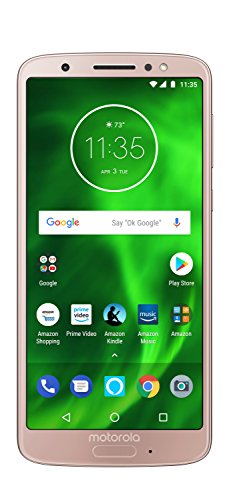
The Motorola Moto G6 is the everyday option in this guide, and the most conventional phone of the three. Its 5.7-inch Full HD+ Max Vision display runs at 1080 by 2160 pixels in a tall 18:9 ratio, which keeps the body narrower than its screen size suggests. A Qualcomm Snapdragon 450 octa-core processor at 1.8GHz pairs with 3GB of RAM and 32GB of storage, expandable by microSD card up to 128GB. That combination handles calls, messaging and streaming without fuss, and the phone launched on Android 8.0 Oreo with an update path to Android 9 Pie.
The camera system is a dual rear setup: a 12 megapixel main camera joined by a 5 megapixel depth sensor for portraits, with an 8 megapixel front camera and LED flash. A 3,000mAh battery supports a day of ordinary use, and TurboPower charging restores hours of use after a short time plugged in. The body is wrapped in Corning Gorilla Glass with a contoured back, a water-repellent coating guards against splashes, and a fingerprint reader sits on the front. Charging and data run over USB-C.
Compatibility is the Moto G6’s strongest card. The unlocked model is listed for AT&T, Sprint, T-Mobile and Verizon, and it works on both GSM and CDMA networks, the most flexible carrier choice here. This is the Prime Exclusive version in Oyster Blush, which comes with Amazon apps pre-installed, including Alexa hands-free. Renewed or used copies are common for this model now, so check the listing condition and the seller’s return terms before ordering.
Pros:
- Broadest carrier support here, covering GSM and CDMA networks
- Sharp 5.7-inch Full HD+ display in a narrow, one-hand-friendly body
- Dual rear cameras with a depth sensor, plus microSD expansion up to 128GB
- Fingerprint reader, USB-C, TurboPower charging and a water-repellent coating
Cons:
- Snapdragon 450 performance is modest for demanding games and heavy multitasking
- New stock is scarce; most listings today are renewed or used
- Prime Exclusive version ships with Amazon apps pre-installed
- Android updates ended years ago, so newer apps may refuse to install
Google Pixel 3a
The Google Pixel 3a is the camera pick of this guide, and the most polished phone of the three. Its 5.6-inch OLED display shows deep blacks and strong contrast that the other two screens cannot match, and the clean Android software keeps the experience simple. A Qualcomm Snapdragon 670 processor pairs with 4GB of RAM and 64GB of storage, with no memory card slot. The phone launched on Android 9 Pie and carries Google’s Titan M security chip, Active Edge squeeze controls and a rear fingerprint reader.
The rear camera is the reason to choose this phone: a 12.2 megapixel dual-pixel sensor with optical and electronic image stabilisation, an f/1.8 aperture and Google’s computational photography, which produces strong results in low light. The front camera is 8 megapixels with a wide field of view. A 3,000mAh battery with fast charging over USB-C supports a day of ordinary use, and the phone includes a 3.5mm headphone jack, stereo speakers, NFC and Bluetooth 5.0. The body is polycarbonate rather than glass or metal, which keeps it light and less fragile.
Carrier support is broad. The unlocked US model is listed as working with all four former major US carriers, including Verizon, and its specifications include CDMA EVDO bands alongside GSM, UMTS and a wide set of LTE bands. That makes it a strong fit for anyone who wants CDMA heritage without giving up camera quality. As with the other phones here, these are older listings, so confirm the exact model number, check the listing condition, and verify activation with your carrier before ordering.
Pros:
- Best camera here by a clear margin, with optical stabilisation and strong low-light results
- Bright 5.6-inch OLED display in a compact body
- Clean Android software with Titan M security chip and Active Edge
- Broad carrier support, including CDMA bands and Verizon compatibility
Cons:
- No microSD expansion, so 64GB is the limit
- Polycarbonate body feels less premium than glass or metal rivals
- No wireless charging
- Android updates have ended, and some newer apps may not install
Comparison: Which One Fits You
Choose the Palm Phone PVG100 if size is the deciding factor and you want the smallest Android phone available in this category. It is a second-phone or minimalist choice first and a primary phone second, and its Verizon-centred compatibility needs checking before anything else. Choose the Motorola Moto G6 if you want the most flexible carrier support and the most conventional everyday phone, with a sharp large-for-its-class display, dual cameras and expandable storage at a modest budget. Choose the Google Pixel 3a if camera quality matters most and you want the best screen and the cleanest software of the three, with broad carrier support as a bonus.
All three share the same cautions: older Android versions, ended update support, and listings that are often renewed rather than new. The differences are about priorities. Size points to the Palm, flexibility points to the Moto G6, and photography points to the Pixel 3a. Match the phone to the carrier first, then to the size, then to the camera, and the choice usually makes itself.
FAQ
Do CDMA phones still work in the United States?
The CDMA networks themselves have been retired, with Verizon shutting its CDMA network down at the end of 2022. Phones described as CDMA-compatible connect today through LTE bands, and whether a specific phone works depends on its LTE band support and on carrier approval. Always confirm with your carrier before ordering.
Will these phones work on Verizon?
All three were built with Verizon compatibility in mind: the Palm is listed for Verizon networks, the Moto G6 is listed for Verizon among other carriers, and the unlocked Pixel 3a is listed as compatible with Verizon. Even so, activation is decided by the carrier, so check the IMEI with Verizon or your Verizon-network carrier before buying.
What does unlocked mean for these phones?
Unlocked means the phone is not tied to a single carrier contract and can be used with a compatible carrier of your choice. It does not mean the phone works on every carrier. Band support and carrier approval still decide whether activation succeeds, which is why checking first matters so much with older models.
Are these phones still updated?
No. All three launched several years ago and their official update support has ended. They remain usable for calls, messaging, maps, music and photography, but some newer apps may require a newer Android version. Check the requirements of any app you depend on before committing.
Should I buy new, renewed or used?
New old stock is rare for phones of this age, so most listings are renewed or used. Renewed listings usually include a limited guarantee and a return window, while used listings vary more. Read the condition description, check what is included in the box, and confirm the return policy before ordering.
Which of these is the smallest phone?
The Palm Phone PVG100, by a large margin. Its 3.3-inch display makes it roughly credit-card sized, while the Pixel 3a at 5.6 inches and the Moto G6 at 5.7 inches are compact only by comparison with current large phones.
Conclusion
The best small unlocked CDMA Android phones are a short list because the category itself is fading: CDMA networks are retired, small phones are rare, and the remaining models are older handsets. Within that short list, the three phones here cover the real choices. The Palm Phone PVG100 is the true miniature for minimalists and second-phone use. The Motorola Moto G6 is the flexible everyday phone with the broadest carrier support. The Google Pixel 3a is the camera-first compact with the best screen and software of the three. Check carrier compatibility first, accept the older software, and pick the phone that matches your size and camera priorities.
Disclosure: As an Amazon Associate, we earn from qualifying purchases.